


As a Doctor of Physical Therapy and certified lymphedema therapist (CLT-LANA), I often find that those with lipedema, lymphedema, or other lymphatic conditions better tolerate low-impact exercises because they are less painful. Low-impact, or seated exercises for lymphatic health can improve circulation without straining the body.
This 10-minute routine is perfect for beginners and anyone with limited mobility. I specifically designed these exercises to be safe and effective for people with compromised lymphatic systems to help with lymphatic flow. You can do it daily from any sturdy chair. Just make sure you’ve been cleared by your doctor before starting any new exercise program.
How Seated Exercise Helps Lymphatic Drainage
Your lymphatic system doesn’t have a pump like your heart, so it relies on muscle contractions to move fluid through your body. When you’re sedentary or dealing with conditions like lymphedema, this fluid can get stuck.
In my clinical practice, I’ve found that patients who do gentle movement daily see significantly better outcomes than those who remain completely sedentary. However, some can’t go out for a run or walk. That’s ok! Seated movements are still beneficial and helpful. The muscle contractions from these exercises act like a manual pump for your lymphatic system.
These seated exercises help by:
- Creating gentle muscle contractions that push lymph fluid through your system
- Improving blood flow to reduce swelling
- Supporting your body’s natural detox process
- Providing relief without high-impact stress on your joints
The key is consistency. Even 10 minutes daily can make a noticeable difference in how you feel.
I typically recommend starting low and slow with a gentle routine like this before moving on to more advanced exercises. Start with 5 to 10 minutes and one can gradually increase a few minutes a week, up to 20-30 minutes per session.
10-Minute Seated Lymphatic Exercise Routine
What you need: A sturdy chair and optional cushion for comfort.
How it works: Do each exercise for 60 seconds, moving slowly and breathing deeply. The entire routine takes about 10 minutes.
Important note: I’ve found that many people try to rush through lymphatic exercises, but slower movements are actually more effective. Your lymphatic system responds better to gentle, sustained muscle contractions rather than quick, jerky movements.
Workout Routine:
- Shoulder Roll
- Neck Roll
- Side Bend
- Trunk Rotation
- Seated Marching
- Seated Side Step
- Knee Tapping
- Seated Kicks with Shoulder Press
- Seated Heel and Toe Raise
- Seated Breaths
10-Minute Seated Exercises for Lymphatic Health
1. Shoulder Roll
Sit upright in a comfortable position with feet flat on the floor. Roll your shoulders forward, up, back, and down in smooth circles. This helps move lymph fluid in your upper body and releases tension.
2. Neck Roll
Drop your chin toward your chest, then slowly roll your head in a circle. Be gentle and stop if you feel any discomfort. This helps drain fluid from your head and neck. In my practice, I often see patients with facial swelling who benefit greatly from this simple movement.
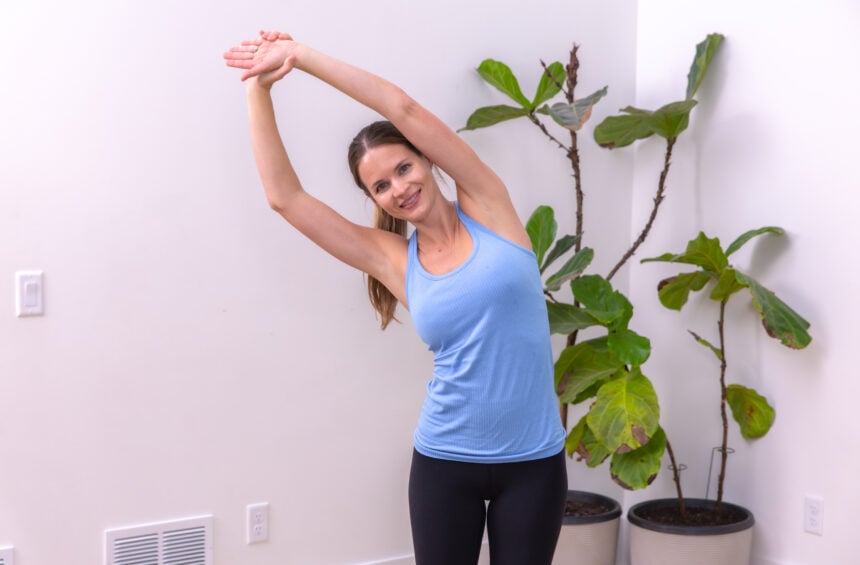
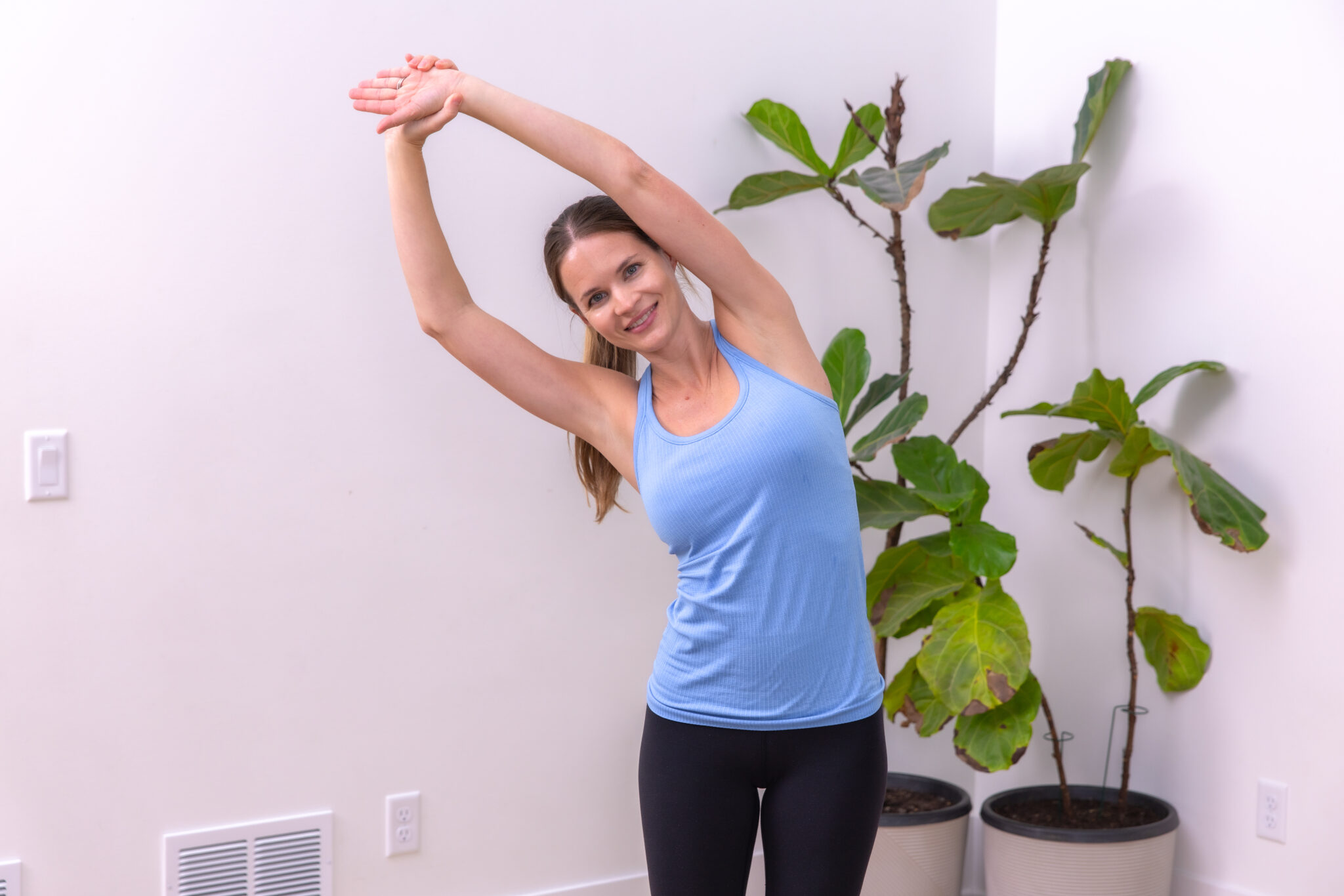
3. Side Bend

Lift one arm overhead and bend to the opposite side. Return to center and switch sides. This gentle stretch helps move fluid along your torso.
4. Trunk Rotation

With hands at chest height, slowly twist your torso from side to side while keeping your hips facing forward. This engages your core and upper chest muscles to help pump lymphatic fluid.
5. Seated Marching
With your knees bent, lift one knee toward your chest, then lower and repeat with the other leg. Add opposite arm swings if comfortable. This activates the large muscles in your legs.
6. Seated Side Step

Step one foot out to the side, then back to center. Alternate sides. This gentle movement helps activate lymph nodes in your groin area.
7. Knee Tapping

Lift one knee and gently tap it with your opposite hand. Alternate sides. This combines movement with gentle stimulation of your lymph pathways.
8. Seated Kicks with Shoulder Press

Extend one leg forward while pressing your arms overhead. Lower and repeat with the other leg. This full-body movement gets multiple muscle groups working together.
9. Seated Heel and Toe Raise
Lift your heels while keeping toes on the ground, then lower. Next, lift your toes while keeping heels down. This activates your calf muscles, which are crucial for lymphatic return. I always tell my patients that these leg muscles are like a “second heart” for your lymphatic system – they are an important pump in your lower body.
10. Seated Breaths
Place your hands on your belly and take slow, deep breaths. This activates your diaphragm, which is one of your body’s most important lymphatic pumps. I teach all my lymphedema patients proper breathing technique because it’s often overlooked but incredibly effective.
Common Mistakes to Avoid in Lymphatic Exercises
Based on my years treating patients with lymphatic conditions, here are the most common mistakes I see people make with these exercises:
Moving too fast – I can’t stress this enough: lymphatic exercises work best with slow, controlled movements, but it’s also important to help avoid injury.
Doing too much too soon – If someone isn’t used to exercise, starting out with a long or intense workout can be more hurtful than helpful. When your body isn’t used to something, it can cause muscle soreness or inflammation in the muscles, which can cause worsening of swelling and more lymphatic fluid in an area.
Pushing through pain – These should feel gentle and comfortable. Pain is your body’s signal to stop
Being inconsistent – In my experience, patients who do 10 minutes daily see better results than those who do 30 minutes twice a week because consistency is key! However, at the end of the day, something is always better than nothing.
Skipping the breathing exercise – Many patients want to skip this “boring” part, but it’s actually one of the most effective parts of the routine. You have a lot of lymph nodes and major lymph vessels in your abdomen that help move fluid, so avoid holding your breath and focus on deep breathing exercises throughout
Supporting Your Lymphatic System – Beyond Exercise
In addition to these seated exercises, there are several simple habits you can incorporate to support your lymphatic system and improve its flow:
- Stay Hydrated: Drinking enough water is key for maintaining healthy lymph fluid flow. When someone is dehydrated, it can negatively impact lymph drainage and cause lymph nodes to swell.
- Self-Massage and Lymphatic Drainage: These techniques can stimulate lymphatic drainage, helping to improve circulation and reduce swelling in congested areas. This is particularly helpful for those with primary or secondary lymphedema or lipedema.
- Compression Garments: If your healthcare provider recommends compression therapy, wearing them with and without exercise will help manage swelling.
As a lymphedema therapist, I always remind patients that exercise is just one tool in the toolbox. These lifestyle factors work together to support your lymphatic flow and health.
Take the 3-Week Lymphatic Health Challenge.
This 10-minute daily routine is a great starting point for supporting your lymphatic health. If you’re ready to take it further, check out LYMPH RESET 21: your free 3-Week Lymphatic Drainage and Exercise Plan for managing swelling and improving the lymphatic drainage.
Frequently Asked Questions:
How often should I do lymphatic exercises?
Exercising for 20-30 minutes a day is ideal – even if that total time is broken up into 2-3 sessions a day. That being said, even 3-4 times per week can be beneficial. Start low and slow and gradually build up in duration and intensity. Listen to your body and adjust as needed.
Can I do these exercises if I have severe lymphedema?
Always check with your healthcare provider first if you have a lymphedema diagnosis. These exercises are gentle and can be beneficial to manage lymphedema symptoms, but your specific condition may require modifications.
How long before I see results with lipedema exercises?
In my clinical experience, most patients notice less stiffness and improved energy within a few days. Visible reduction in swelling or body fat typically takes 4-8+ weeks of consistent practice. However, everyone’s body responds differently, so be patient with yourself.
Can you reverse lipedema with exercise?
Exercise can’t reverse lipedema, but it can significantly help manage symptoms and improve your quality of life. As a lymphedema therapist, I need to be honest with my patients about this – lipedema is a progressive condition that affects how fat is distributed in your body, and exercise alone won’t make it go away. However, the right types of low-impact exercise can reduce swelling, improve lymphatic drainage, maintain mobility, and reduce pain.
What exercises should be avoided with lipedema?
Focus on gentle, low-impact activities like swimming, walking, and seated exercises that support lymphatic flow. I encourage my patients to avoid high-impact exercises like running, jumping, intense aerobics, and heavy weightlifting with lipedema to start, as these often come with pain. They are not off-limits if someone tolerates them and enjoys them, though!
What if I can’t do all 60 seconds of each exercise?
Start with whatever feels comfortable – even 20-30 seconds is beneficial. I tell all my patients to start small and build up gradually. It’s better to do 30 seconds consistently than 60 seconds sporadically.