

Cording after a mastectomy is common and uncomfortable, but you don’t have to live with it.
Also called Axillary Web Syndrome (AWS), cording is a side effect that can develop after breast cancer surgery. It appears as tight, rope-like bands of tissue in your armpit, which can be painful and limit how far you can move your arm.
With the right care, cording can get better.
I’m a Board-Certified Oncology Clinical Specialist, and in this guide, I’ll walk you through the most effective ways to treat Axillary Web Syndrome and start feeling like yourself again.
What Is Cording After Mastectomy?
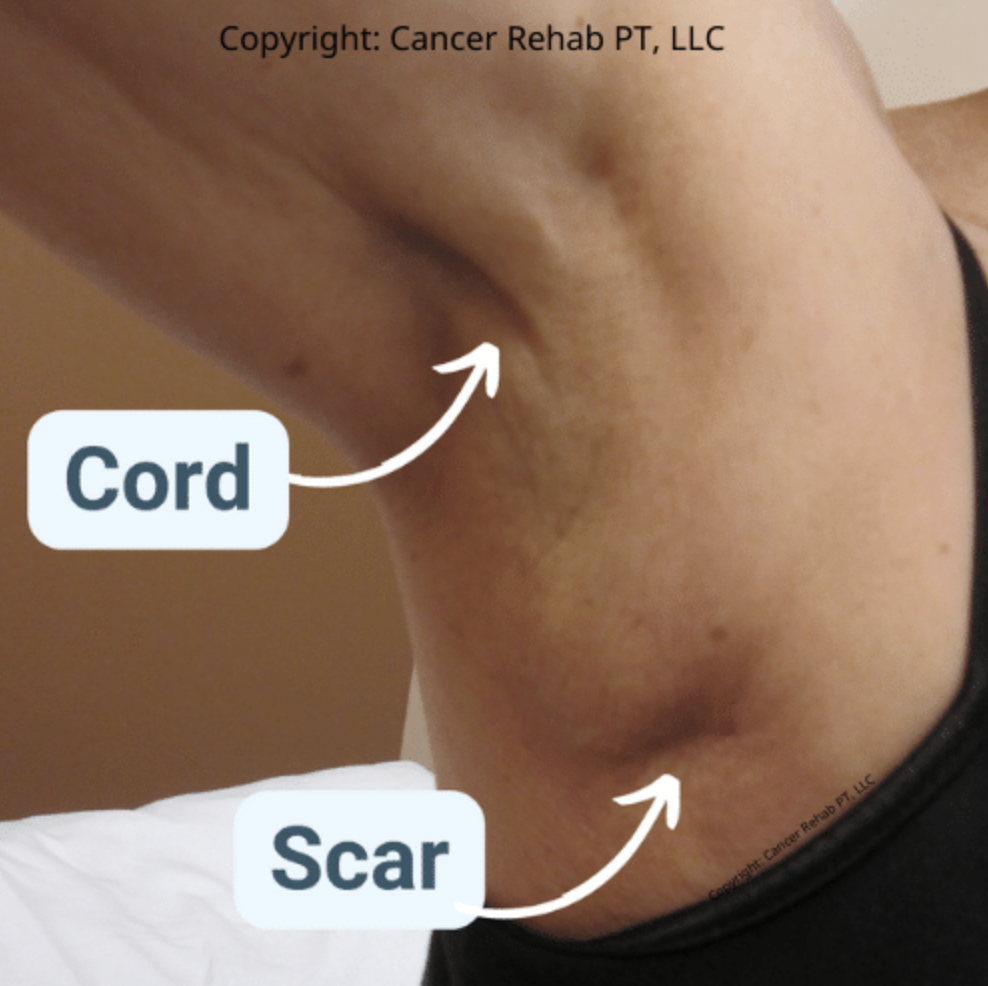
Cording, or Axillary Web Syndrome, feels like tight bands of tissue just under the skin of your armpit. These bands can stretch down your arm toward your elbow and hand, and many people say they look or feel like guitar strings pulled tight beneath the skin.
Cording usually starts 2 to 8 weeks after breast cancer surgery, but it can also appear months or even years later.
Cording under breast after mastectomy
Cording doesn’t only form in the armpit. It can also develop lower down, along the chest wall and under the breast or reconstruction site. You might feel a tight band or a pulling sensation across your chest, especially when you lift or stretch your arm.
This kind of cording can make it uncomfortable to stand up straight or take a full, deep breath, but the same treatments that ease underarm cording usually help here, too.
Cording under arm after mastectomy
Cording under the arm is the most common form of Axillary Web Syndrome.
The cords develop in the armpit, where lymph nodes were removed or damaged during surgery. You may notice one thick cord or several thinner ones, and they often become more visible or painful when you raise your arm overhead. This tightness can shorten your reach and make everyday tasks, like getting dressed or reaching a high shelf, feel harder.
What Causes Cording After Mastectomy?
Doctors don’t fully understand what causes cording, but it’s thought to come from injury to the lymphatic vessels and nearby tissue during breast cancer surgery. Having a mastectomy raises your risk.
A few things can make cording more likely. The number of lymph nodes removed during surgery, the amount of scar tissue you develop, and your individual anatomy all play a role. Radiation and chemotherapy can also trigger cording or make existing symptoms worse over time.
How common is cording after breast surgery?
Cording is common, but exact numbers vary widely from study to study.
Research has reported cording in anywhere from 6% to 86% of patients following breast cancer surgery, and that wide range depends largely on how closely doctors looked for it and the type of surgery involved.
Careful prospective studies land closer to the middle, with roughly half of patients developing cording within the first 8 weeks to 18 months after surgery.
Your risk is higher if you had lymph nodes removed from under your arm (such as with axillary lymph node dissection or sentinel lymph node biopsy).
What Does Cording Feel Like After Mastectomy?
Most people describe cording as tightness, pulling, or discomfort in the affected area. You can often feel the cords under your skin, and they may be tender to the touch. Moving or raising your arm can feel stiff and restricted.
Sometimes cording comes with swelling, bruising, or visible changes to the skin. Symptoms range from mild to more intense, and they can last several weeks or months after your surgery or breast cancer treatment.
Pictures of Cording After Mastectomy
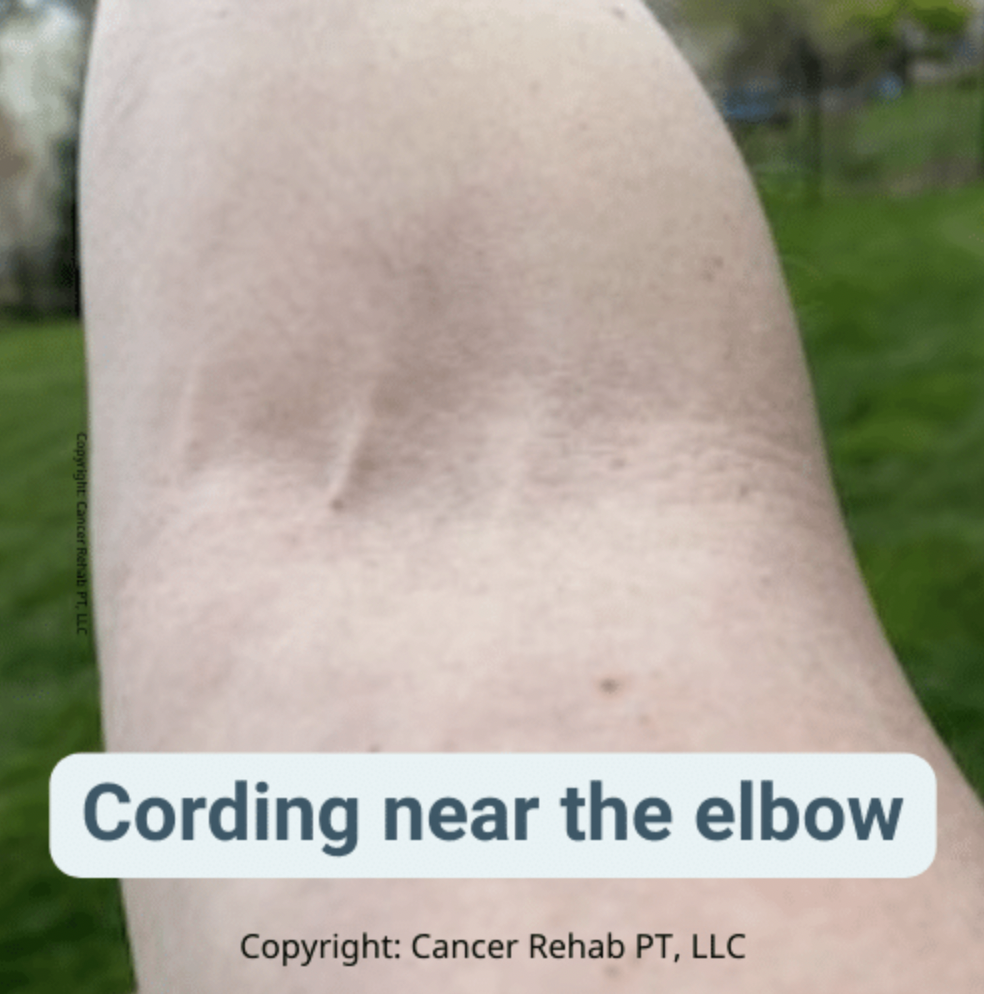
Below is a picture of cording after mastectomy to help you see what Axillary Web Syndrome can look like. Keep in mind that cords aren’t always visible. You can still have cording even if your armpit and inner arm look completely normal.
How to Treat Cording After Mastectomy: 7 Things You Can Do
1. Stretching Exercises
Gentle stretching is one of the best places to start. It helps loosen tight cords, ease stiffness, and get your arm moving through a fuller range again. Focus on low-intensity stretches that open up your chest and the pec muscles along the front of your shoulder.
If you’re not sure where to begin, I demonstrate a few of my favorite stretches in the video below.
2. Nerve Glides
Nerve glides, sometimes called nerve flossing, help mobilize the nerves and tissue affected by your surgery.
To try one, raise your arm to about 90 degrees and gently draw it back. When you feel tension or a pulling sensation down your arm, pause there. If you don’t feel much yet, bend your wrist back and forth to deepen the stretch. For even more, tilt your head so your ear moves toward the opposite shoulder, away from your arm.
The stretch should feel mild, never painful. If anything hurts, stop. Pushing too far can leave you sore, so take it slow
3. Myofascial Release
Myofascial release, also called soft tissue mobilization, is a massage technique that releases tension in the fascia, the thin layer of connective tissue that wraps around your muscles, nerves, and blood vessels. It targets the fascial restrictions under the skin that contribute to cording.
A trained therapist can perform myofascial release, but you can also learn to do it yourself at home. I walk through the technique in my YouTube video.
4. Manual Lymphatic Drainage (MLD)
Manual Lymphatic Drainage (MLD) is a gentle massage technique that stimulates your lymphatic system and reduces swelling. Getting the lymph fluid moving again can soften the tight cords in your arm.
An MLD session uses light, rhythmic strokes directed toward your lymph nodes, which helps drain fluid and ease discomfort in the area.
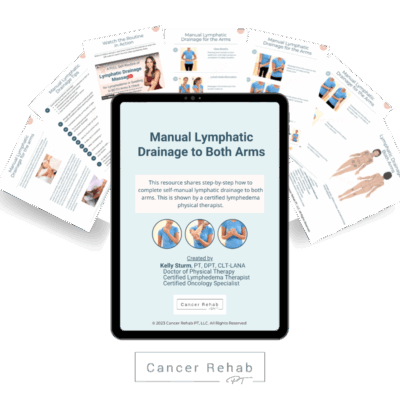
I have a few guides to help you get started:



5. Compression Therapy
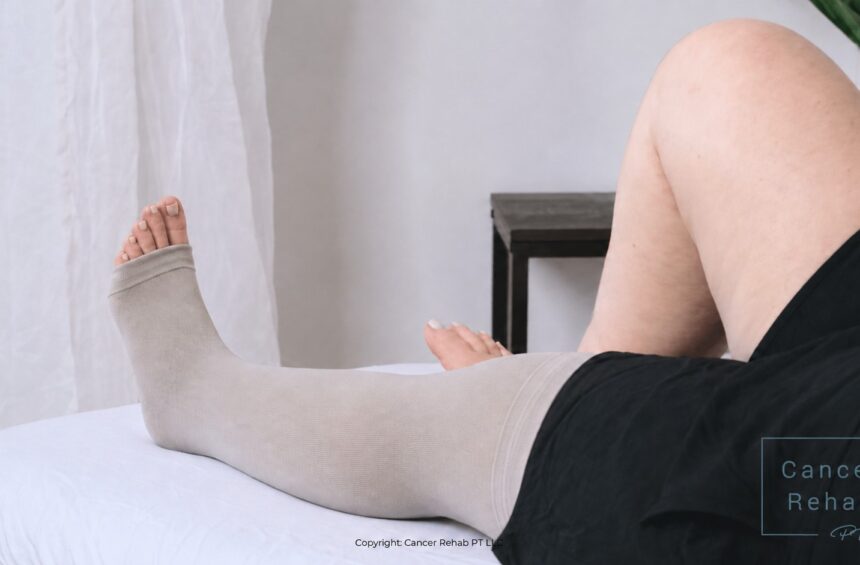
Compression therapy uses garments or bandages that apply gentle, steady pressure to your affected arm. That pressure helps reduce swelling and calm the symptoms of cording after mastectomy.
For it to work well, the garment needs to fit correctly, so ask your healthcare provider to recommend the right one for you.
Here are my favorite brands:


6. Scar Mobilizations
Scar mobilization works on releasing adhesions and improving the flexibility of scar tissue after surgery or radiation. It’s firmer than MLD or myofascial release, and it can help break down hardened scar tissue, free up trapped lymph fluid, and restore movement in the area.
Because it’s more intense, ask your healthcare provider to show you safe scar mobilization techniques before trying it on your own.
7. Heat Therapy
Heat therapy, like a warm compress or heating pad, relaxes your muscles, boosts blood flow, and eases tension in the area. Applying warmth to your armpit and inner arm can soothe discomfort and help the cords relax.
Use heat carefully to avoid burns or skin irritation, and follow your provider’s guidance on how long and how often to apply it.
Exercises for Cording After Mastectomy
Regular, gentle exercise is one of the most effective ways to release cording and keep it from coming back. Certain movements stretch the tight bands, restore your range of motion, and help your arm feel looser day by day.
I’ve put together a guide with the exercises I use with my patients to relieve cording:

How Long Does Cording Last After Breast Surgery?
There’s no single timeline, since cording is different for everyone. For many people, it improves within a few weeks to a few months, especially with stretching, physical therapy, and the treatments above. Some cords loosen on their own as you heal.
That said, cording can be stubborn. It may last longer, fade and then return, or appear months to years after surgery. If your cording sticks around, gets worse, or keeps coming back, a physical therapist who specializes in cancer rehab can help you get it under control.
How to Prevent Cording After Mastectomy
You can’t always prevent cording, since a lot depends on your surgery and how many lymph nodes were removed. But you can lower your risk and reduce how severe it gets.
The most helpful step is to start moving gently soon after surgery, once your surgical team clears you. Simple range-of-motion exercises keep your shoulder and arm mobile and discourage tissue from tightening into cords. Staying active, following your post-op exercise plan, and working with a physical therapist early on all give you the best odds of staying ahead of it.
If you notice a cord forming, don’t wait. Early treatment tends to resolve cording faster.
You can also follow my Breast Recovery Roadmap.
FAQs
How do you get rid of cording after breast cancer surgery?
Several techniques can help. Stretching exercises that target your chest and pec area release tight cords and ease stiffness, and nerve glides mobilize the affected nerves and tissue. Manual Lymphatic Drainage, compression therapy, scar mobilization, myofascial release, and heat therapy are all useful tools too. A physical therapist can help you combine the ones that work best for you.
Does cording lead to lymphedema?
No, cording doesn’t cause lymphedema. The two can be linked, since both involve the lymphatic system and fluid buildup, but one doesn’t lead to the other. Manual Lymphatic Drainage and compression therapy can help with both.
Does cording lead to breast cancer recurrence?
No. Cording can be uncomfortable and limit your arm movement, but it doesn’t raise your risk of breast cancer coming back.
Does cording after mastectomy ever go away?
Yes. In most cases, cording gets better and goes away with time and treatment. Stretching, physical therapy, and hands-on techniques like myofascial release can speed things up. Some cords resolve on their own, but they occasionally return or take longer to clear. If yours isn’t improving, a cancer rehab physical therapist can help.
How painful is cording?
It varies. For some people, cording causes only mild tightness or discomfort in the armpit and inner arm. For others, it’s more painful and gets in the way of everyday activities like reaching, dressing, or lifting.
What exercises help cording?
Stretching exercises that target your chest and pec muscles are some of the most helpful for cording. They release tight cords, ease stiffness, and improve your range of motion. Nerve glides, also called nerve flossing, work well too.
Try these breast cancer cording exercises and techniques.
Looking for More Physical Therapy for Cording After Mastectomy?
If you want more guidance, my program Breast Cancer Rehab covers cording in depth, along with everything else that comes with recovering after breast cancer surgery.
You’ll find step-by-step exercises, hands-on techniques, and the support you need to move comfortably and get back to doing what you love.
Join Breast Cancer Rehab today!