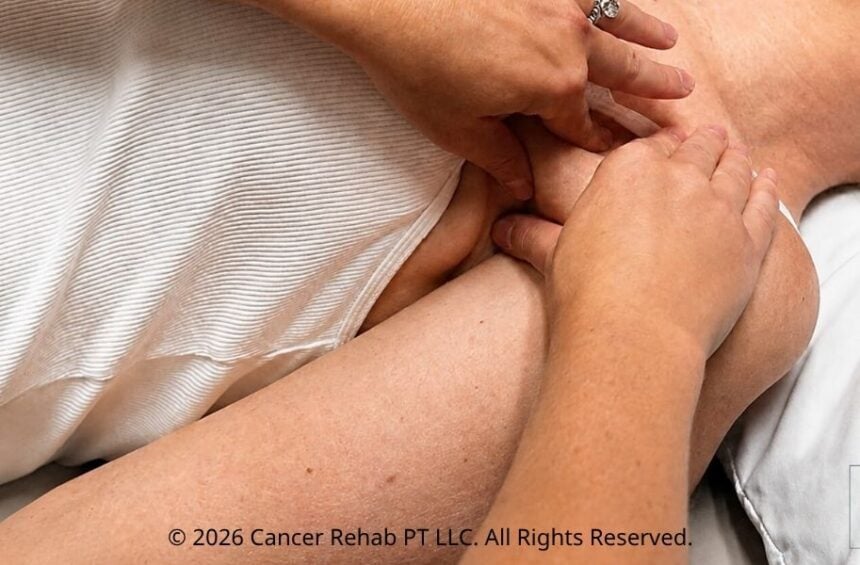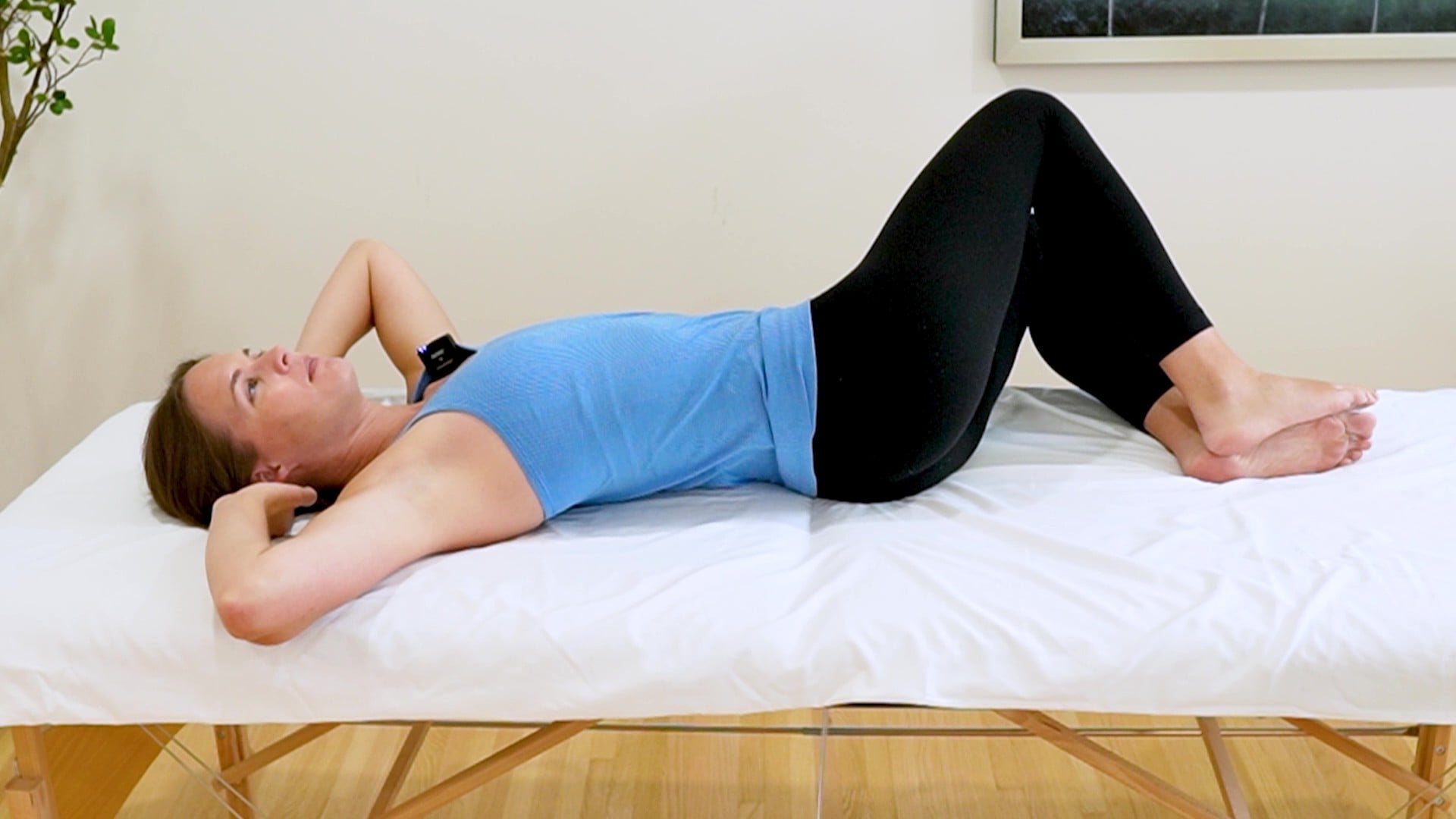
If you’ve finished radiation and your chest, shoulder, or neck still feels tight, these exercises for radiation fibrosis syndrome breast cancer survivors can do at home are a gentle place to start. With regular stretching, the tightness can ease, and moving your arm can start to feel more natural again.
I’m Kelly Sturm, a Doctor of Physical Therapy (PT, DPT), certified lymphedema therapist (CLT-LANA), and Board-Certified Oncology Clinical Specialist. Radiation fibrosis is something I treat often, and exercise is a big part of how I help people get their mobility back.
Below, I’ll walk you through what radiation fibrosis syndrome is, how exercise helps, and four stretches you can add to your routine.
What Is Radiation Fibrosis Syndrome After Breast Cancer?
Radiation fibrosis syndrome is the name for the symptoms that come from radiation fibrosis, which is thick, stiff tissue that forms in an area treated with radiation.
Radiation is very good at targeting cancer cells, but it also affects the healthy tissue in the treatment area. Your body responds by trying to repair that tissue. Sometimes the repair goes further than it needs to, and the new tissue comes in thicker and less organized.
Over time, this tissue loses its stretch and can make the area feel tight and stiff.
With breast cancer, radiation usually targets the breast or chest wall, and sometimes the lymph nodes in the armpit or around the collarbone. This puts your skin, chest muscles, the muscles between your ribs, and the tissue around your shoulder in the treatment area.
Because these tissues connect to your neck and upper back, you can feel the effects well beyond your chest.
Radiation Fibrosis Syndrome Symptoms
Radiation fibrosis syndrome tends to build over time. It’s a progressive condition that often develops late, anywhere from weeks to years after treatment, and it can involve your muscles, soft tissue, and nerves.
Common symptoms of radiation fibrosis syndrome after breast cancer include:
- Stiffness or pulling across your chest when you move your arm
- Skin in the treated area that feels thick, firm, or tough
- Trouble lifting your arm overhead or reaching behind you
- Aching in your chest, shoulder, or armpit
- Tightness in your neck or upper back
- Shoulders that round forward more than they used to
- A restricted feeling in your ribs when you breathe in deeply
- Swelling in your breast, chest, or arm
These symptoms can be treated, even if your radiation ended years ago, and exercise is one of the most effective tools for easing them.
Does Exercise Help with Radiation Fibrosis Syndrome After Breast Cancer?
Yes, exercise is one of the most helpful things you can do for radiation fibrosis syndrome after breast cancer.
Radiation fibrosis in your chest muscles is one of the main reasons your shoulder can lose motion. In fact, limited shoulder range of motion after breast cancer treatment is often caused by fibrosis in the pectoralis major, the large muscle across the front of your chest. When that muscle gets tight, it limits how far your arm can move.
Research supports staying active. In a clinical trial of women going through radiation for breast cancer, shoulder exercises helped preserve the ability to raise the arm forward and out to the side, and lowered the rate of scar tissue adhesions.
Different types of exercise help in different ways:
- Stretching keeps the muscles around the treated area flexible and eases tightness
- Deep breathing during stretches helps move the small muscles between your ribs
- Strengthening your upper back helps balance out tight chest muscles and supports better posture
- Regular movement improves blood flow to the treated area
Keep in mind that fibrotic tissue doesn’t stretch the way healthy muscle does. Stretching works best when it’s paired with hands-on manual techniques to soften the fibrosis, too.
Whatever exercise you do, keep it gentle and build up slowly. Pushing too hard too fast can cause inflammation and slow down your progress.
4 Exercises for Radiation Fibrosis Syndrome After Breast Cancer
For these stretches, I start my patients with gentle, short holds of about 5 to 10 seconds so the stretch stays comfortable. As your body adjusts, you can work up to holding each stretch for 30 seconds, and eventually up to 60 seconds.
Longer holds are more effective for muscles affected by radiation or radiation fibrosis than short, quick ones, but you should build up to them slowly. Even as your hold time increases, the stretch itself should stay mild and gentle.
1. Side-lying pec stretch
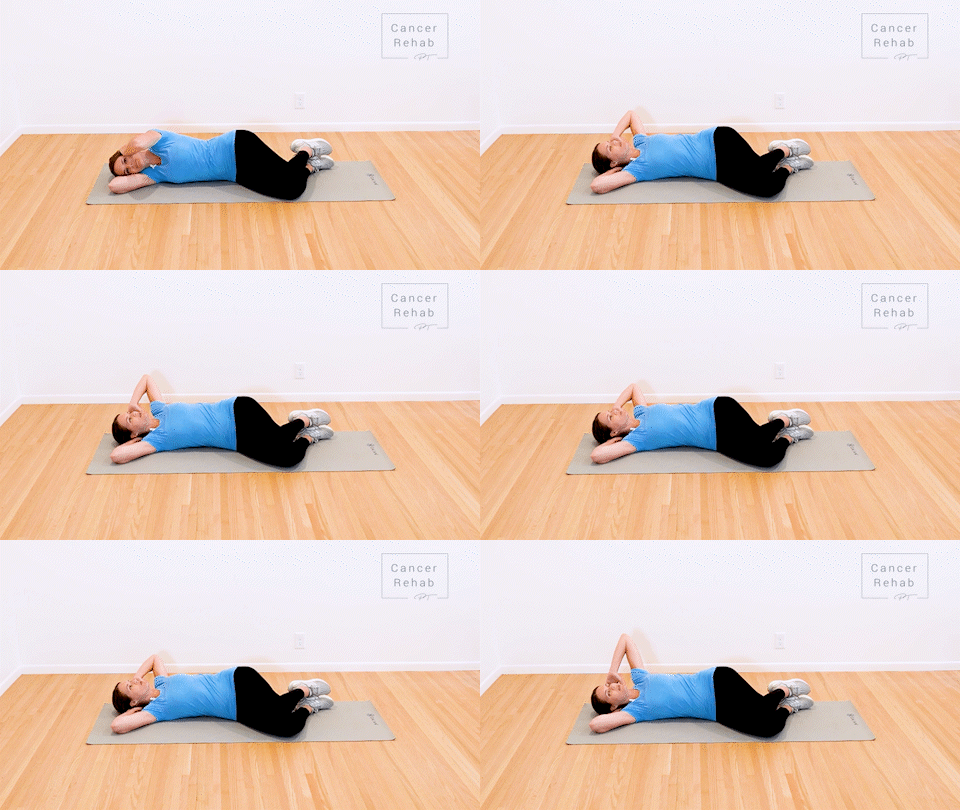
Your pec muscles run across the front of your chest to your shoulder, and they’re often right in the radiation field. When they tighten, they pull your shoulder forward and make it harder to open your arm out to the side. This stretch gently opens up the front of your chest.
- Lie on the side that didn’t have radiation, so the side you’re stretching is on top
- Place your hands behind your head and neck with your elbows pointing out in front of you
- Slowly open your top elbow back, as if you’re pointing it toward the wall behind you
- Let your upper body rotate with the movement, stopping when you feel a mild to moderate stretch
- Take a deep breath and feel your ribcage expand
- As you breathe out, let yourself sink a little further into the stretch
If you had radiation on both sides, repeat this stretch on the other side.
2. Side-bending neck stretch
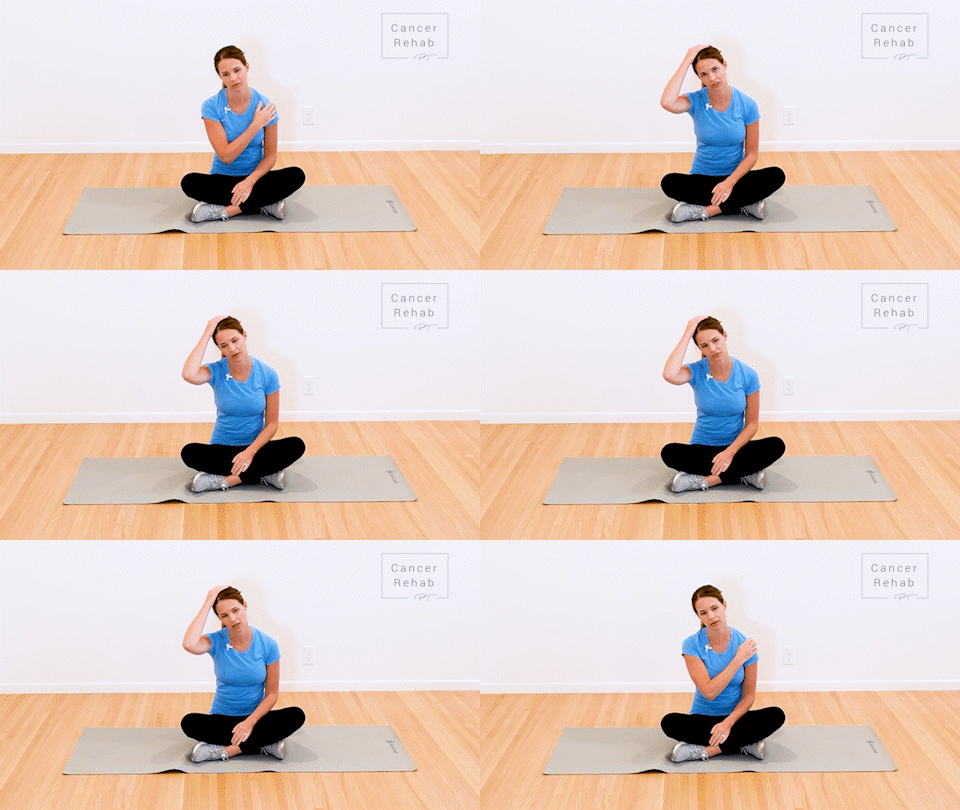
Even if your neck wasn’t in the radiation field, the muscles that were treated connect to the muscles in your neck.
When your chest feels tight, your neck often works harder to make up for it, which can lead to stiffness and poor posture. Stretching your neck helps take some of that strain off.
- Sit or stand tall with your shoulders relaxed
- Gently tilt your ear toward the shoulder on the opposite side of the one you’re stretching
- For a deeper stretch, rest a hand on top of your head and gently guide it further, or press down lightly on the shoulder you’re stretching
- Stop when you feel a mild to moderate stretch along the side of your neck
- Hold for at least 10 seconds, working up to about 20 seconds, then relax
- Repeat on the other side
Stretch both sides to keep things balanced between your tighter side and your less tight side. You can do this stretch a couple of times throughout the day.
3. Ballerina stretches
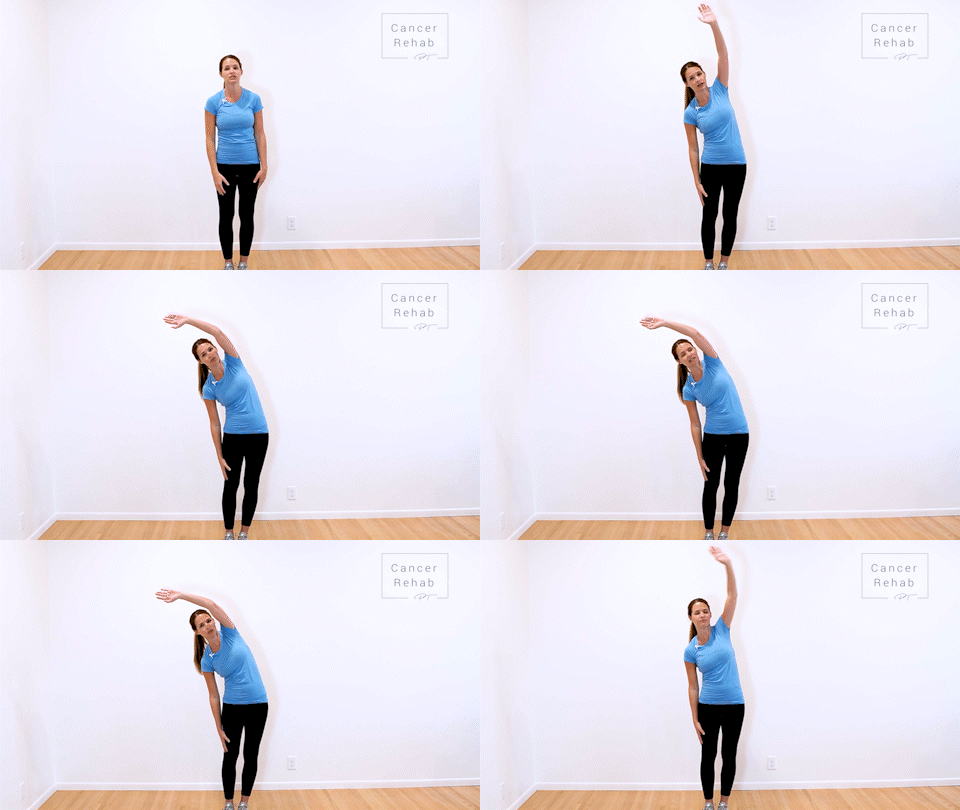
Most of us rarely reach overhead in daily life, so tightness along the side of your body can feel surprising. The ballerina stretch lengthens the side of your chest and helps you get your arm back overhead, which improves the range of motion in your shoulder.
- Stand tall and grab the wrist of the arm you’re stretching with your opposite hand
- Raise both arms up and over your head
- Gently lean toward the side of the hand that’s holding your wrist until you feel a stretch along your side
- Take a deep breath in, pause, and slowly come back to center
- Repeat on the other side to compare how the two feel
If holding your wrist feels uncomfortable, you can simply raise your arm overhead and lean to the side.
4. Child’s pose
Child’s pose stretches your arms overhead and reaches the tight spots along the side of your chest. There are two ways to do it, so choose the version that feels best for your body.
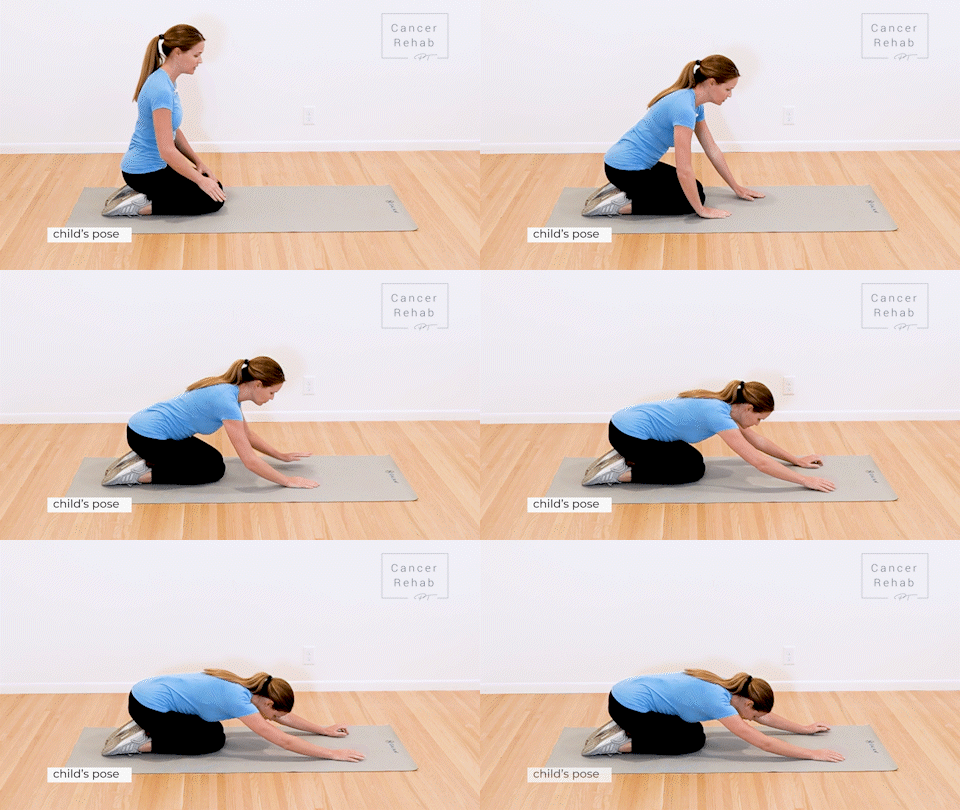
For the first version, start on your knees:
- Kneel on a mat or soft surface
- Walk your hands forward along the floor, reaching your arms out in front of you
- Lower your chest toward the floor until you feel a stretch
- Take a deep breath in and feel your ribs expand
- As you breathe out, sink a little further into the stretch
- Hold, then slowly walk your hands back to come up
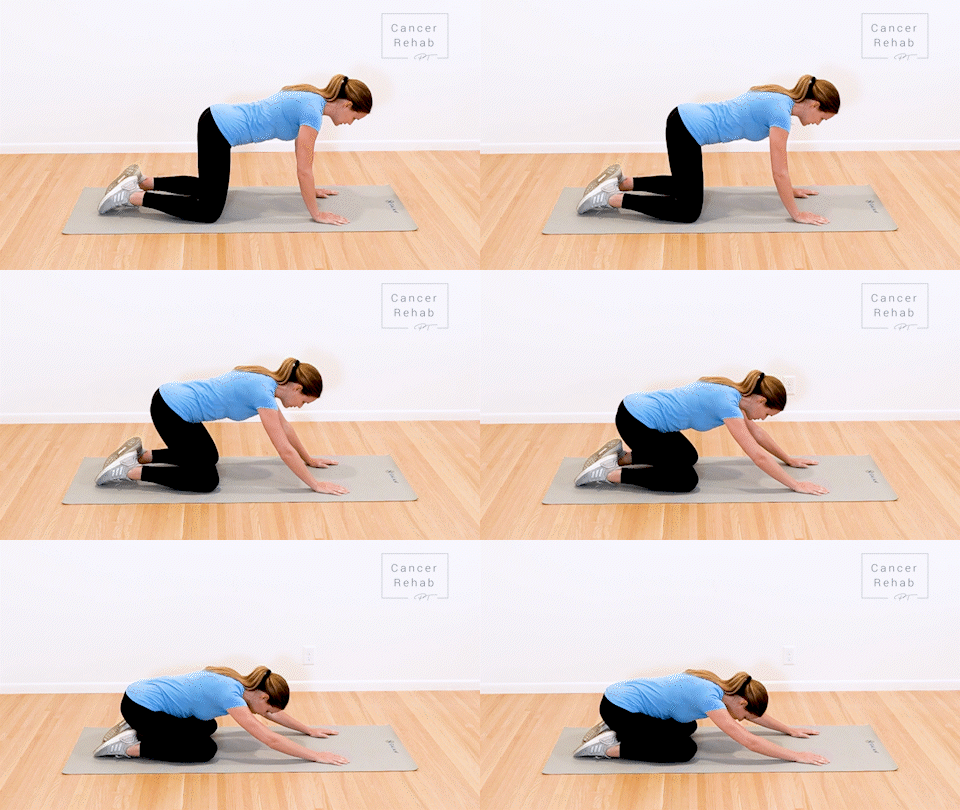
For the second version, start on your hands and knees:
- Place your knees hip-width apart, or slightly wider
- Keep your hands where they are and slowly lower your hips back toward your heels until you feel a stretch
- Adjust how far back you go to control the intensity
- Take a deep breath in and feel your ribs expand
- As you breathe out, sink a little further into the stretch
You can also switch between the two versions depending on how your body feels.
Deep Breathing During Exercises for Radiation Fibrosis Syndrome
With every stretch, I cue a big, deep breath right into the area of tension. Radiation can affect deeper muscles and tissue, including the intercostal muscles between your ribs. These muscles are hard to stretch, and they’re hard to reach with hands-on treatment, too.
When you take a deep breath, your ribs expand and move these small muscles from the inside. Over time, this can help ease the tight, restricted feeling across your ribs and chest. Breathing out slowly also helps your body relax.
Other Ways to Treat Radiation Fibrosis Syndrome After Breast Cancer
Stretching is a great foundation, but fibrotic tissue doesn’t have the same elasticity as healthy muscle. That means just stretching often isn’t enough to loosen it.
The best results usually come from combining a few approaches:
- Manual therapy uses hands-on techniques like tissue rolling and myofascial release to soften fibrotic tissue
- Strengthening exercises like rows and shoulder blade squeezes build up your upper back to support better posture
- Cupping lifts and mobilizes tissue that’s hard to grab by hand
- Instrument-assisted soft tissue mobilization (IASTM) uses specialized tools to work on deeper tissue
- Compression garments can help manage swelling that develops alongside fibrosis
There are also newer approaches to treating radiation fibrosis, such as low-level laser therapy, which may help reduce inflammation and support healthier collagen, though more research is needed.
Learn more about how to reduce side effects of radiation therapy.
Looking for More Exercises for Radiation Fibrosis Syndrome After Breast Cancer?
As a Doctor of Physical Therapy (PT, DPT), certified lymphedema therapist (CLT-LANA), and Board-Certified Oncology Clinical Specialist, I’ve spent more than a decade helping people recover their strength and mobility after cancer treatment.
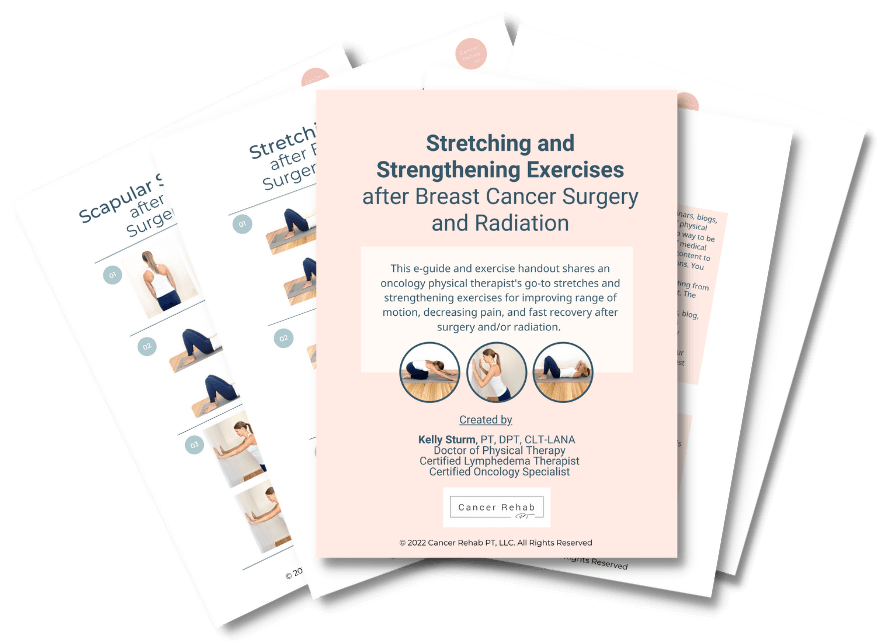
Finding a therapist who specializes in cancer rehab isn’t always easy, so I’ve created printable exercise guides you can follow at home, on your own schedule.


For Clinicians: Learn to Assess and Treat Radiation Fibrosis
If you work with breast cancer survivors, you know how frustrating it is when fibrotic tissue stops responding to treatment. Fibrosis Management in Rehabilitation is my continuing education course that teaches the framework and techniques I use in my practice.
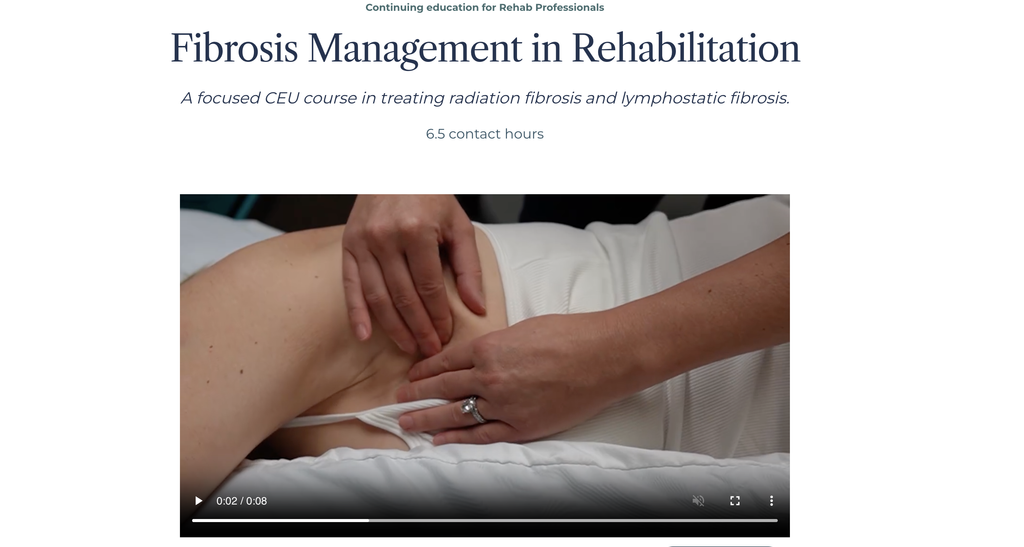
The course is self-paced, offers 6.5 contact hours, and covers hands-on assessment and treatment of both radiation fibrosis and lymphostatic fibrosis. You’ll learn how to read tissue, match your technique to what you find, and build a treatment plan with more confidence.
Improve Radiation Fibrosis with Breast Cancer Rehab
Tightness after radiation can make everyday movements like getting dressed or reaching for a shelf feel hard and uncomfortable, but you don’t have to accept that as your new normal.
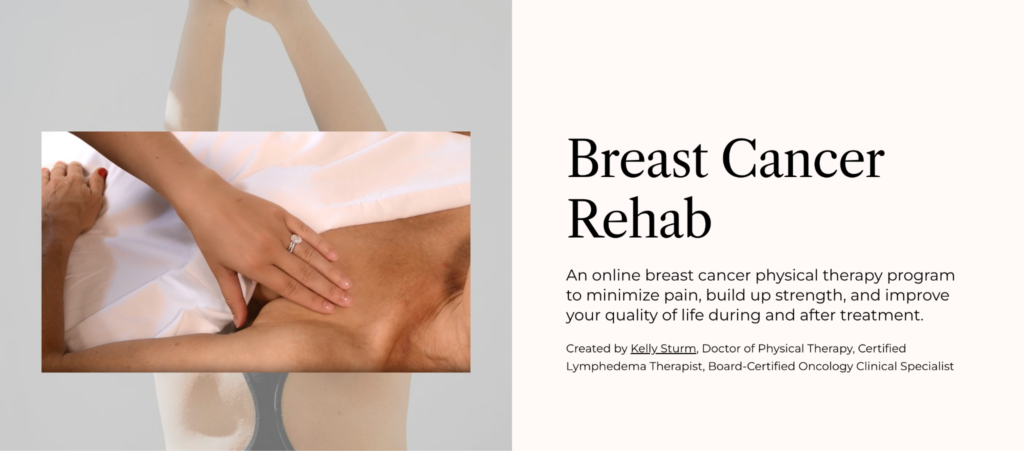
Breast Cancer Rehab is my online physical therapy program for breast cancer survivors, and it includes education on radiation side effects, stretches for all levels, and manual therapy and soft tissue mobilization techniques you can do at home.
Learn more about Breast Cancer Rehab and join today!