

You know that puffy, heavy feeling you get in your face sometimes—especially in the morning or when you’ve been sick? That’s often your lymphatic system telling you it needs some help.
👋 Hello, I’m Kelly Sturm, a Doctor of Physical Therapy (PT, DPT) and a Certified Lymphedema Therapist. I share helpful resources for those living with lymphedema and lymphatic health concerns.
I’ve taught this face lymphatic drainage routine to hundreds of patients over the years. Whether you’re dealing with post-surgical swelling, sinus congestion, or just that everyday puffiness we all get sometimes, this 5-minute routine can make a real difference when done correctly.
This is Day 16 of LYMPH RESET 21: your free 3-Week Lymphatic Drainage and Exercise Plan.
Benefits of Manual Lymphatic Drainage (or MLD)
In my practice, I use manual lymphatic drainage (MLD) as part of comprehensive treatment plans for patients dealing with various types of swelling. It’s a gentle massage technique that guides lymphatic fluid through specific pathways to your lymph nodes, where it gets filtered and processed before returning to your bloodstream.
Lymphatic facial massage has become increasingly popular in therapeutic and beauty settings because it is relatively simple to perform, and its benefits are wide-ranging. Certified physical therapists specializing in lymphedema frequently recommend lymphatic drainage face massage to patients, as a way to support their lymphatic system and manage the following conditions:
Lymphatic Drainage for Swelling
This is probably the most common reason patients come to me asking about facial lymphatic drainage. Whether you’re dealing with post-surgical swelling, excess fluid from injury, or fluid retention from conditions like lymphedema, this technique helps direct lymph fluid through the right lymphatic channels toward your lymph nodes, where it can actually be processed and drained.
Lymphatic Drainage for Sinus Pressure and Congestion
Sinus pressure and congestion can be incredibly annoying, making it difficult to focus on daily life tasks. I can’t tell you how many patients have found relief from chronic sinus pressure using this technique. Lymphatic drainage massages offer a natural, non-invasive way to relieve this pressure by encouraging fluid movement out of the congested area.
Lymphatic Drainage for Allergy Relief
While we don’t have extensive research on this yet, many of my patients find that regular facial lymphatic drainage helps decrease allergy symptoms by improving drainage from swollen tissues. Clearing those lymphatic pathways can reduce inflammation and lead to easier breathing and less pressure around your eyes and sinuses—areas that get hit hard during allergy season.
How to Perform Lymphatic Drainage (For the Head, Neck, and Face)
I’ve seen so many variations of this technique online, and honestly, most of them miss the mark. Here’s the routine I teach my patients—This is a full routine of lymphatic drainage facial massage to help move fluid for a healthy lymphatic system.
If you would like to follow along as I demonstrate this routine, you can watch it in my YouTube video here.
Lymphatic Massage Routine Details:
- This routine can be done sitting or standing
- 5 minutes is needed for the entire routine
- Looking for a printable handout? Shop my guide.
- No Equipment Needed
- Best done on clean, dry skin
Full Lymphatic Massage Routine for the Head, Neck, and Face
Start with Deep Breathing
- Place your hands on your abdomen.
- Take four deep breaths, pressing gently inward as you inhale and exhale.
- This helps stimulate the lymph nodes in your abdomen and gets your whole lymphatic system activated—something most people skip but it’s actually crucial
Stimulate the Lymph Nodes Near the Collarbone
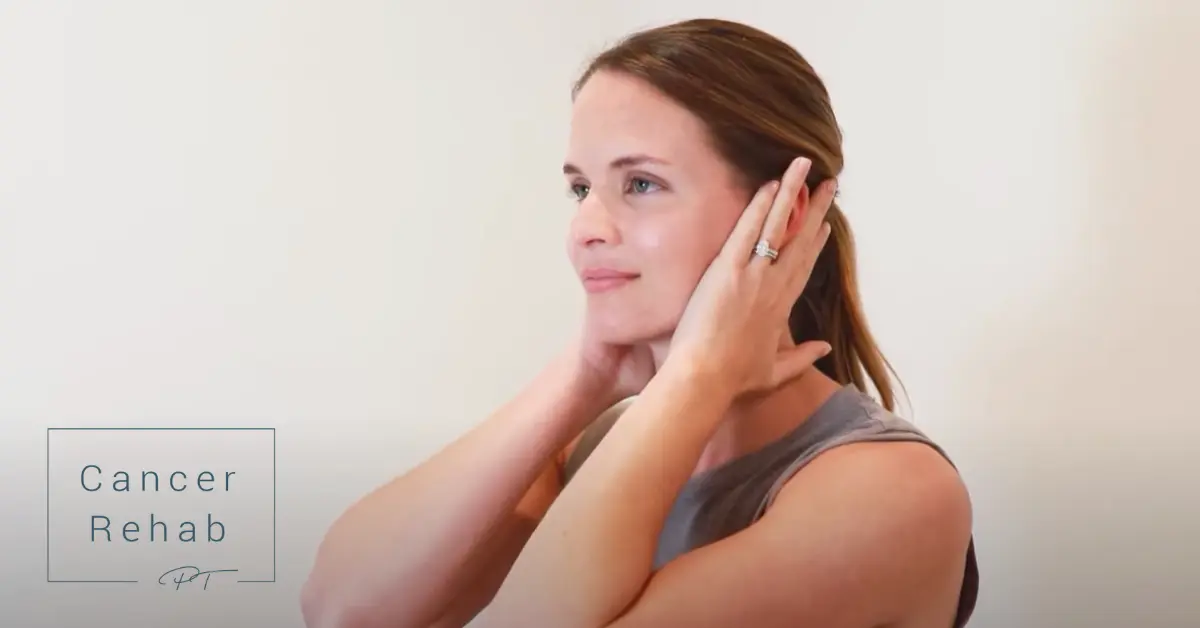
- Place your hands on the collarbone area.
- Gently make 10-15 circles in either direction with light pressure.
- This is where fluid from the face and body goes before being drained back toward the heart.
Stimulate Lymph Nodes Around the Ears

- Split your fingers on either side of your ears, with your hands resting against your face.
- Perform 10-15 gentle circles on both sides to stimulate the nodes in this area.
- These nodes process a lot of the fluid from your face, so activating them first makes the whole routine more effective
Guide Fluid Down the Neck

- Wrap your fingers around the side of your neck.
- Gently stroke downwards from just below the ears toward the collarbone.
- Repeat 5-10 times on each side.
- This creates the “drainage pathway” for everything we’re about to move
Move Fluid from the Jawline to the Ears

- Start under the jawline and move fluid outwards toward the lymph nodes below the ear.
- After guiding fluid from the jawline, repeat downward strokes along the side of the neck to the collarbone.
Drain Fluid from the Chin and Lips

- For the chin, gently massage from the center out toward the ears.
- Moving fluid toward the nodes below the chin when working on the upper lip.
Massage the Cheeks and Eyes

- For the cheeks, stroke gently from the center of the face outwards toward the ears.
- Under the eyes, use light pressure to guide fluid out and down toward the nodes below the ears.
Finish with the Forehead
- Massage in circular motions across the forehead, working from the center outwards, and guide the fluid down the sides of the face.
Final Neck Drainage
- After decongesting the face, perform final strokes down the neck, guiding all fluid toward the collarbone.
- Repeat on both sides as needed.
Re-stimulate the Lymph Nodes
- To complete the routine, gently massage in circular movements for a few final strokes to re-stimulate the lymph nodes around the collarbone and ears.
- Complete 3-4 final deep belly breaths to stimulate the central lymphatic system.
Tips and Tricks for Optimal Lymphatic Drainage
I see so many people doing facial lymphatic drainage incorrectly online—even some influencers with millions of followers. Although following these techniques is usually not harmful, there is a good chance they won’t be effective or helpful.
Let me share a few lymphatic massage tips that can make all the difference in maximizing the results of a daily face lymphatic drainage routine. As with any routine, consistency and proper technique are key.
- Use gentle pressure. The lymphatic system is just beneath the skin, so pressing hard during your massage is unnecessary. Using gentle pressure with rhythmic strokes will be more effective and save your hands from pain! Lymphatic drainage should always be done directly on the skin.
- Massage in the right direction. Always guide the fluid toward the central lymph nodes in the neck and collarbone. This ensures the fluid is properly filtered and returned to the heart for circulation. If you go in the opposite direction, you’re simply pushing the lymphatic fluid in the wrong direction, adding to congestion and backup.
- Use your full hand when able. The more surface area of your hand that you use, the better. If you only use your fingertips, you’re missing many lymphatic vessels, which won’t be as effective. Think about moving toothpaste through a toothpaste tube. Sure, using a finger will move some, but it’ll move more effectively if you use your whole hand.
When to Consult with a Healthcare Professional
If you have underlying health conditions or concerns, consult your healthcare provider or a highly qualified, certified lymphedema therapist before starting lymphatic drainage. This is particularly important for individuals with:
- Active Cancer: Avoid performing lymphatic drainage over areas where cancer is present or being treated unless your oncologist or doctor clears you.
- Infections or Inflammation: If you have an active infection, skin conditions, or open wounds in the area you plan to massage, it’s best to wait until these conditions fully heal.
- Blood Clots: Individuals with blood clots or deep vein thrombosis (DVT) should immediately avoid MLD and seek medical attention.
- Heart or Kidney Conditions: Conditions such as congestive heart failure or severe kidney disease can be contraindications for lymphatic drainage, as increasing fluid in these areas can further strain these organs. If your conditions are well-managed, many doctors are open to MLD, but you need their clearance first.
- Chronic Illnesses: Those with chronic illnesses such as uncontrolled diabetes or autoimmune disorders should work with a certified lymphedema therapist or doctor for personalized guidance and treatment.
Frequently Asked Questions
What time of day should I perform lymphatic drainage massage?
If your doctor has cleared you, this can absolutely be part of your daily routine. For optimal results, I recommend doing this in the morning—most people wake up with some facial puffiness from lying flat all night, and this routine can really help clear that out.
Doing it during or after a warm shower can also be beneficial, as the warmth helps with circulation.
How often should you lymphatic massage your face?
This really depends on your individual situation. For general wellness and reducing daily puffiness, many of my patients do this as part of their morning routine. For specific conditions like post-surgical swelling or chronic lymphatic issues, you might need it more frequently—but I always recommend working with a qualified therapist to determine what’s right for you.
How long does it take for lymphatic drainage to work?
The time it takes for lymphatic drainage to reduce swelling depends on the severity of the condition, a person’s health status, and how often one is doing manual lymphatic drainage.
What are the symptoms of poor lymphatic drainage in the face?
In my practice, I see patients with facial puffiness, swelling around the eyes and neck, feelings of heaviness or congestion, and sometimes that “tight” feeling in their face. If you’re experiencing persistent or worsening swelling, it’s important to get evaluated by a healthcare provider to rule out underlying conditions.
Take the Next Step
Facial lymphatic drainage is a gentle, effective technique that can provide real relief for puffiness, congestion, and swelling when done correctly. As someone who’s taught this to hundreds of patients, I can tell you that proper technique and consistency are everything.
If you’re dealing with more complex lymphatic issues or want comprehensive support, check out my programs and lymphatic drainage guides in my shop. And remember—when in doubt, work with a certified lymphedema therapist who can provide personalized guidance for your specific situation.