Lymphatic drainage massage for legs can be a helpful treatment for those struggling with swelling and lymphedema. Our lymphatic system is a complex network of vessels, organs, and tissues that works alongside the circulatory system to maintain fluid balance and remove toxins.
If someone’s lymphatic system isn’t working correctly, or perhaps they had surgery requiring lymph nodes to be removed, it can cause the system to get backed up. This can lead to swelling and lymphedema. If fluid builds up too long, someone is at a higher risk for cellulitis. Lymphatic massage can be a helpful treatment for lymphedema and lymphatic congestion.
👋 Hello, I’m Kelly Sturm, a Doctor of Physical Therapy (PT, DPT) and a Certified Lymphedema Therapist. I share helpful resources for those living with lymphedema and lymphatic health concerns. Subscribe to my YouTube Channel, get my free guides, or join my Lower Body Lymphedema Program.
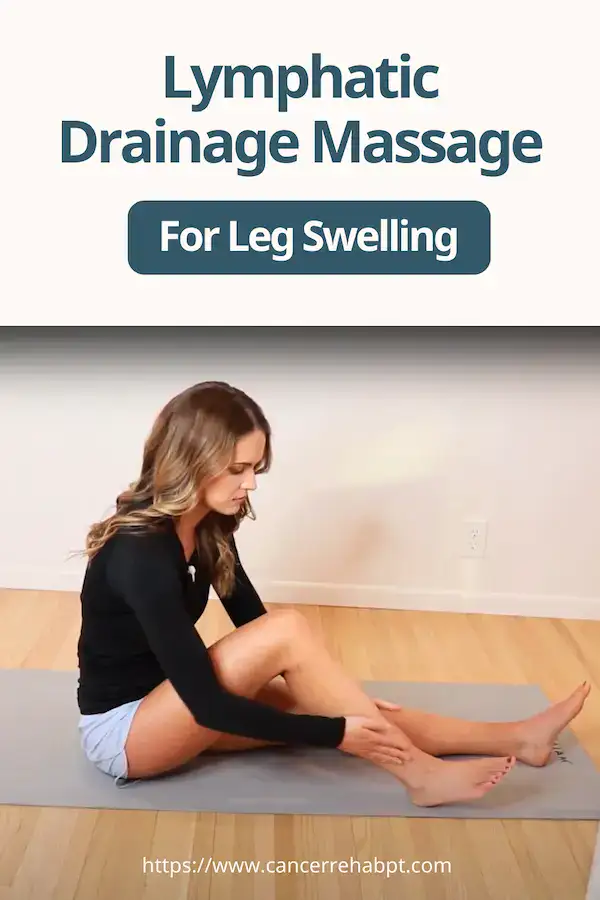
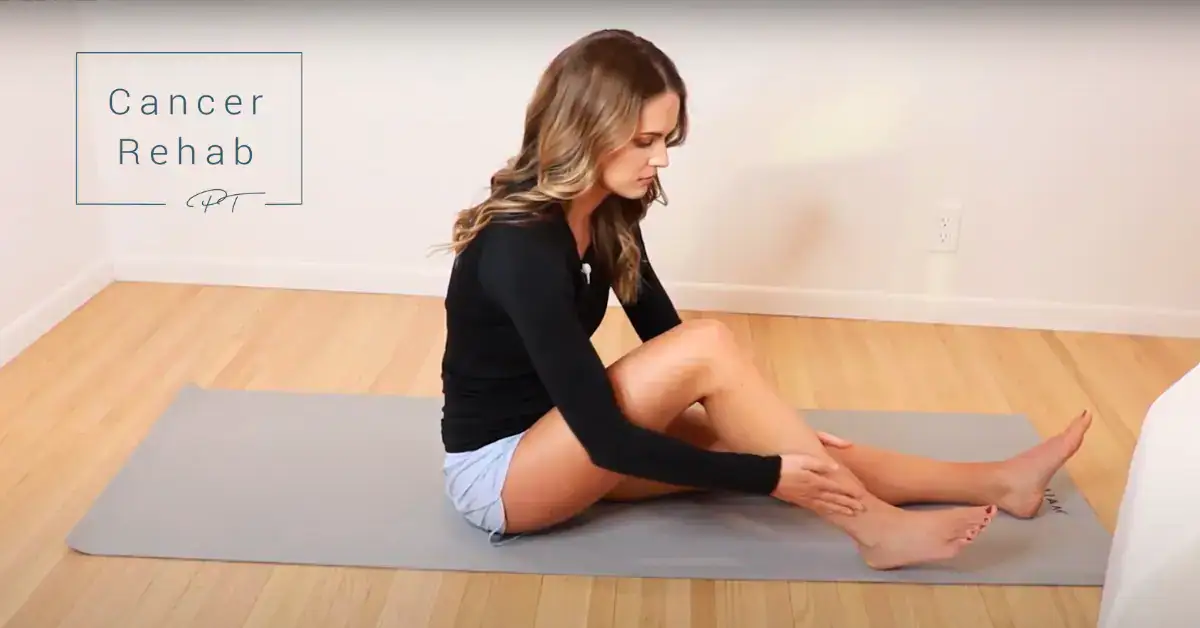
If you’re looking for a step-by-step lymphatic massage technique to reduce swelling in the legs, this gentle, lower-body lymphatic massage routine can be done at home and without any equipment. I designed this sequence with simplicity in mind. I focus on gentle self-massage movements that stimulate the lymphatic system, helping to enhance circulation and encourage the natural flow of fluid.
This is Day 5 of LYMPH RESET 21: your free 3-Week Lymphatic Drainage and Exercise Plan. It is an easy sequence that encourages lymphatic flow and helps move fluid in the lower body.
How to Perform Lymphatic Drainage for Leg Swelling or Lymphedema
This is a manual lymphatic drainage massage routine to improve the lymphatic system and reduce swelling in the legs. If you would like to follow along while I model this routine, you can watch this YouTube Video ↓
Lymphatic Drainage Details:
- This routine can be done sitting or lying down
- 24-minutes needed for the entire routine
- Looking for a printable handout? Shop my guide.
Looking for more?
💪 FREE 3-week lymphatic flow plan.
Equipment Needed
No equipment is needed for this routine.
Workout Routine
- Abdomen
- Groin
- Torso
- Upper thighs
- Behind the knees
- Lower legs
- Ankles and feet
- Reverse the direction
Proper Lymphatic Massage Technique for Reducing Swelling in Legs
1. Abdominal belly breaths

- Sit comfortably, or lay down and elevate your legs using a bolster to let gravity assist with fluid movement.
- Place one hand on your abdomen, gently press inward, and take a deep breath, feeling your belly expand into your hand.
- Repeat this deep belly breathing 3-4 times, moving your hand slightly to different areas of your abdomen with each breath.
2. Clear the lymph nodes in the head and neck.
- Use your whole hand to make gentle circular motions above your collarbone on one side of your neck.
- Repeat 8-10 times, applying light pressure.
- Move to the other side and repeat the same circular motion.
- Place your fingers below the ears, at the base of the neck.
- Make circles on each side 8-10 times.
3. Stimulate the groin lymph nodes.

- Gently massage the area in the crease of your hips (where your legs meet your torso).
- Use circular motions with light pressure to stimulate these lymph nodes, performing 8-10 circles on each side. This will prepare the lymphatic pathways to move fluid up from the legs.
4. Massage the sides of your torso.

- Start at the sides of your hips and use sweeping motions to massage the fluid upward toward your armpits. This should be done directly on the skin, when able.
- Perform 5-8 strokes on each side, moving from the hips toward the armpit area. This is essential for clearing any fluid congestion in the lower abdomen and sides of the body before focusing on the legs.
5. Work from the upper thigh.

- Begin at the top of the thigh and use both hands to apply light pressure, working upward toward the groin. Even if the swelling is only in the lower leg or ankle, starting at the top of the thigh is vital to prevent congestion.
- Repeat this motion 5-8 times on each leg, covering the thigh’s front, sides, and back. As you reach the sides, gradually wrap your strokes toward the front to guide the fluid toward the lymph nodes.
6. Stimulate behind the knees.
- Massage the area behind the knees with circular motions 8-10 times.
7. Move the lymphatic fluid in the lower leg.

- Work from the ankle up toward the knee using as much surface area of your hands as possible.
- Gently massage upward on the lower leg’s front, sides, and back 5-8 times. You can go directly upward in the back without wrapping around, as the lymphatic vessels flow straight toward the lymph nodes behind the knee.
8. Massage the ankles and feet.

- Spend extra time massaging around the ankle bones, as fluid tends to collect in these areas. Use circular motions around the inner and outer ankle bones.
- Massage the top of the foot and between the tendons, using your fingers to stimulate the lymphatic flow gently.
- Finally, massage each toe individually or together, guiding fluid upward toward the ankle.
9. Reverse the direction to complete the sequence.
- Once you’ve worked down to the toes, you’ll want to reverse the direction and massage the fluid back up the leg focusing on the most affected areas.
- Start again at the toes and work upward, repeating the steps from the ankle to the knee, the thigh, and up toward the groin.
- Then, complete the above routine on the opposite leg, if desired.
- Finish by stimulating the abdominal lymph nodes with deep breathing as described in step 1.
Benefits of Lymphatic Drainage Massage
Manual lymphatic drainage (MLD) is a specialized massage technique widely practiced to help manage conditions like lymphedema. Lymph drainage massage involves gentle, rhythmic strokes that help encourage and guide the movement of lymph fluid out of swollen areas.
Implementing lymphatic massage into your daily or weekly lymphedema treatment can be very beneficial for your lymphatic system.
Benefit #1 – Lymphatic drainage can help relieve symptoms of lymphedema and improve the flow of lymph fluid.
Manual lymph drainage is generally considered a simple and safe treatment option for individuals with lymphedema, a condition in which excess lymph fluid builds up and causes swelling. This technique reduces congestion and relieves discomfort by gently moving lymphatic fluid through lymphatic vessels and away from affected areas.
Benefit #2 – Lymphatic drainage massages help boost the immune system and reduce stress.
The lymphatic system plays a crucial role in immune function by transporting white blood cells that help fight infections. When lymphatic fluid is effectively circulated, it supports a stronger immune response.
Manual lymph drainage massage encourages this process, helping to boost immunity and keep the body better equipped to fight off illnesses.
Benefit #3 – Lymphatic drainage can benefit people with chronic venous insufficiency, fibromyalgia, and other health conditions.
In addition to its benefits for lymphedema, lymphatic drainage techniques can be an effective treatment for individuals with chronic venous insufficiency. This condition causes blood to pool in the veins, particularly in the lower legs.
It’s also beneficial for those with fibromyalgia, as the gentle pressure can alleviate pain and reduce tenderness in the muscles.
Other health conditions, such as chronic fatigue syndrome, lipedema, and even post-surgical recovery, may improve with regular lymphatic drainage treatments.
Final Thoughts
Managing lymphedema can feel overwhelming, especially in your legs, but you don’t have to go through it alone. For additional guidance and resources, subscribe to my YouTube channel and explore my digital downloads designed to support lymphatic health. You can find simple lymphedema workout routines in this YouTube Playlist.
To learn stretches, techniques, and exercises that you can do at home to manage leg lymphedema, see my comprehensive Lower Body Lymphedema Program.
Precautions and Considerations
While lymphatic drainage massage is generally a safe and beneficial treatment for many people, caution is necessary in certain situations. Individuals with certain medical issues may require a tailored approach or should avoid the massage altogether.
Always seek professional advice from your local healthcare provider or physical therapist if you are experiencing pain, are currently in cancer treatment, have a history of deep vein thrombosis or blood clots, have underlying heart issues, or are dealing with an infection.
Frequently Asked Questions
Is walking good for lymphedema in the legs?
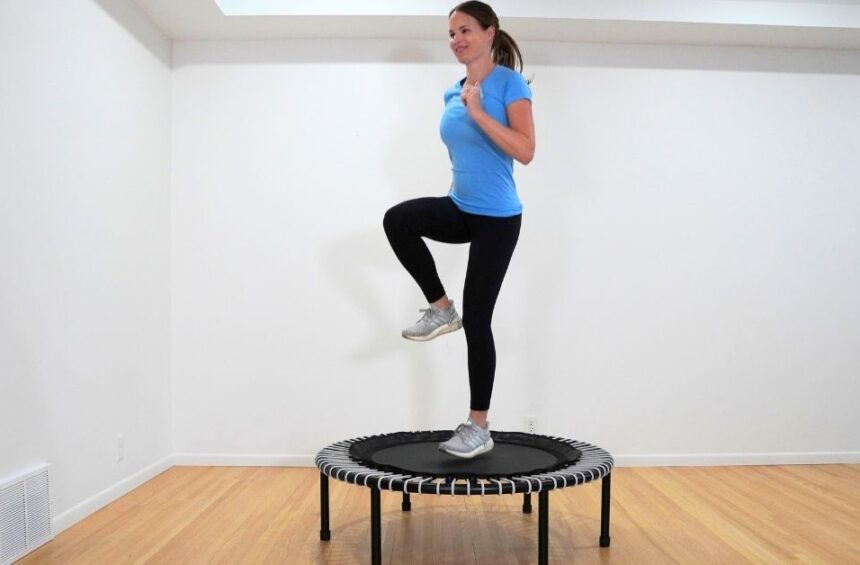
Walking is generally considered a good low-impact exercise for those with lymphedema because it encourages muscle pumping which helps improve lymphatic circulation. This can reduce swelling and improve one’s quality of life. Other low-impact exercises that are good for lymphedema include cycling and swimming.
What causes poor lymphatic drainage in the legs?
Poor lymphatic drainage in the legs can be caused by a variety of things: including lack of exercise, trauma, infection, and some health conditions such as cancer treatments. If you are experiencing poor lymphatic drainage it is always best to consult your local healthcare provider for more personalized guidance.
What are the signs of lymphatic issues?
A common sign of lymphatic issues includes swelling in the arms, hands, feet, or face. Additional signs can include recurring infections, fevers, and fatigue.
How to tell if lymphatic drainage is working?
A common way to tell if lymphatic drainage is working is by noticing if you have reduced swelling in the affected areas, a decrease in tightness or heaviness, and improved mobility. If you are unsure whether your lymphedema symptoms are improving, it is always best to seek guidance from your healthcare provider or lymphedema specialist.