

Looking for a gentle morning lymphatic drainage exercise routine you can do at home? This sequence is designed to support lymph flow, reduce feelings of heaviness or swelling, and help you ease into your day.
My name is Kelly, and I am a physical therapist who specializes in lymphatic health as well as oncology.
Your lymphatic system responds best to movement! Keep reading for an all-standing full body lymphatic drainage routine to help you feel lighter, less stiff, and more energized!
Why Morning Movement Matters for Your Lymphatic System
I have worked with thousands of patients with lymphatic conditions and truly believe that lymphatic health isn’t a one-time fix.
Many of my patients with lymphedema notice they’re more swollen first thing in the morning after lying still overnight. Gentle movement right away can help move that fluid and leave you feeling more comfortable for the rest of the day.
A few ways to encourage lymph movement include:
- Manual lymphatic drainage massage
- Dry brushing
- Having a healthy diet and wellness routine
- Gentle vibration plate exercises
- Rebounding workouts for a healthy lymphatic system
- Red light therapy
But movement is one of the most accessible tools you have — and this routine is free!
15 Minute Full Body Lymphatic Drainage Routine
This 15-minute lymphatic routine is great to add to your morning routine to help flush out toxins, improve your immune health, encourage the flow of lymph fluid, and naturally increase energy.
These movements will be done from a standing position in 45-second increments. No equipment is needed!
This workout was created in partnership with Lindsay Bomgren, the founder of Nourish Move Love. Lindsay is a fitness trainer who specializes in at-home strength workouts. She believes that all movement is good movement, especially when it comes to functional strength. I started using her videos 4 years ago and cannot recommend her enough!
You can watch the full YouTube video with Lindsay Bomgren from Nourish Move Love below.

Please make sure to listen to your body and pause, modify, or adapt as needed. If you’ve recently had surgery or are currently going through cancer treatment, check with your healthcare provider before starting any new exercise routine.
Deep Breathing
All of your major lymph nodes within your lymphatic system are in your abdomen and around your trunk, so we want to make sure we stimulate those prior to getting started.
- Reach your hands above your head as you take a big breath in and exhale as you release your hands back down
- Repeat for 3 breaths
Shoulder Rolls + Gentle Neck Mobility
- Slowly roll your shoulders backwards 3-5 times
- Roll your shoulders forward 3-5 times
Shoulder Squeezes
- Squeeze your shoulders back, opening up the chest
- Round your back and extend your arms forward
Shoulder Complex

- Arms at 90 degrees, rotate your arms up with your palms down
- Rotate your arms open into a goal post position
- Reach overhead
- Come back to your goal post position
- Rotate back down
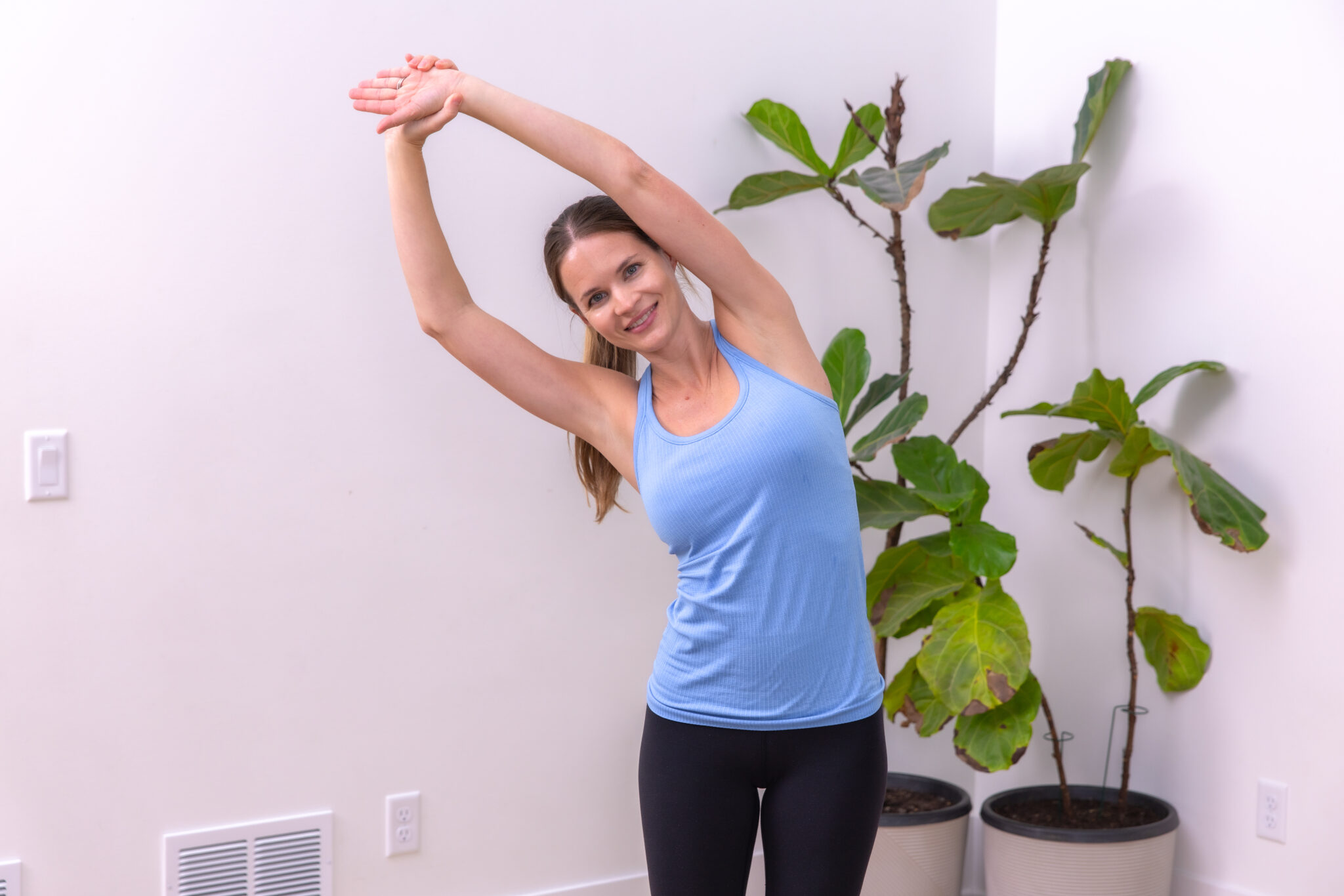
Alternating Ballerina Stretches
- Reach your arms straight above your head
- Grab one wrist and stretch to the side
- Repeat on the other side
- If you feel comfortable, repeat the same motion, swinging your arms all the way around
Chest Openers with Overhead Reach

- Arms straight out in front of you, palms together
- Reach one hand straight back behind you, and stretch back until you feel a light stretch
- Come back to the center
- Repeat on the opposite side
Alternating Gate Steps
- Drive your knee up and out to the side, in a marching movement
- Repeat on the other side
Runner’s Stretch Lunge
- One foot forward and one back behind you
- Shift your weight towards the front leg
- Engage your core and make sure you aren’t arching into your lower back
- Come back to the center
- Switch sides
Hip Hinge to Toe Raises

- In a neutral standing position, place your hands behind your head
- Hinge at the hips and bring your upper body forward
- Return to standing and lift onto your toes
Alternating Marches
- Begin marching in place
- Take your hand and tap your opposite knee
- repeat back and forth
Functional Squats

- Take a lateral step to the side
- Squat down
- Come back up
- Take a lateral step to the other side and squat
Reverse Movements
You will now repeat all exercises in reverse.
The reason we do this is to follow the pathway that the lymphatic fluid takes. Your lymphatic system is split into quadrants. We initially started working in the centralized part of our body, then moved to the middle, heart, upper, and lower body. We want to now reverse and move the fluid back through the system.
Repeating movements is a great way to be consistent with mobility patterns.
Deep Breaths
You will finish your workout with 3 deep breaths, reaching your arms overhead as you inhale, or placing your hands on your belly.
Final Thoughts
In this sequence, we focused on encouraging gentle muscle activation for lymphatic flow. The next step would be adding strength movements into your workout routine.
I encourage you to check out Nourish Move Love for full-body strength workouts you can do at home!
She has anything from 5 minutes to 30 minutes, so you can easily fit some type of movement into your daily routine.
Prioritizing your lymphatic system doesn’t have to be strenuous or take much time out of your day. With consistent movement and self-care rhythms, you can feel your best!
Frequently Asked Questions
Is it better to drain your lymphatic system in the morning?
The best time to drain your lymphatic system is a time you can be consistent with. However, I have found that a lot of my lymphedema patients tend to be more swollen in the morning after lying down at night. Doing manual lymphatic drainage or moving your body in the morning can help relieve some of this swelling and leave you feeling more energized for your day.
How do I tell if my lymphatic system is clogged?
Common signs of a clogged lymphatic system include swelling, fatigue, and an overall feeling of heaviness or tightness. If you believe you may have lymphedema, it’s best to reach out to a certified lymphedema therapist in your area for more personalized guidance.
How many times a week should you drain your lymphatic system?
For most people, daily gentle movement is ideal — even just 10 to 15 minutes. Your lymphatic system responds to consistency more than intensity. If you have diagnosed lymphedema, daily self-care (including manual lymphatic drainage or compression) is typically recommended as part of your maintenance routine. That said, everyone is different, so work with your lymphedema therapist to find a schedule that fits your specific needs and stage of treatment.
How to stimulate your lymphatic drainage?
The most effective approach is building daily habits you can actually stick to — things like gentle movement, deep breathing, staying hydrated, and manual lymphatic drainage massage. Some people also find dry brushing, vibration plates, red light therapy, or rebounder workouts helpful. Start simple, stay consistent, and build from there.