

If you’re wearing a compression sleeve or stocking during the day, should you keep it on at night too? If compression helps, is more compression better?
As a Doctor of Physical Therapy and Certified Lymphedema Therapist (CLT-LANA), I’m going to walk you through why daytime compression socks and sleeves are not designed to be worn at night, and what to use instead if you do need nighttime support.
The short answer: No, you shouldn’t sleep in your daytime compression socks or garments. In most cases, it’s not safe, and it can actually make swelling worse.
Below, I explain why I don’t recommend wearing compression socks to bed, share my top suggestions for nighttime garments, and discuss who might benefit from using them
Why You Should Not Wear Compression Socks to Bed
Daytime compression garments work with your body in motion. When your muscles contract and relax, they push against the garment, and that movement drives fluid through the lymphatic system. The garment helps that process along.
When you lie down and go to sleep, that whole system slows. Your blood pressure drops. Circulation slows. Your muscles are still. At that point, a compression garment can shift from helpful to harmful.
Can Compression Socks Cut Off Circulation?
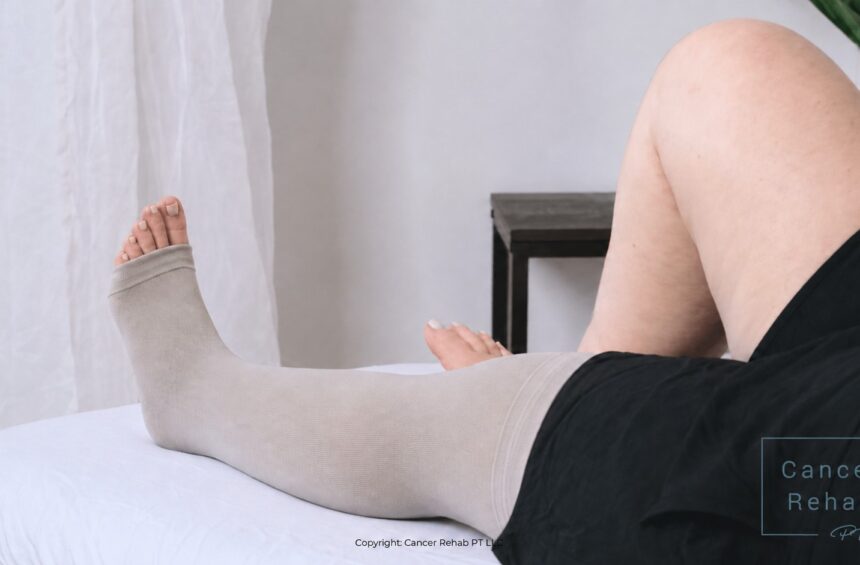
Daytime compression sleeves and stockings are circular-knit garments. They are designed to provide consistent pressure that supports your limbs during movement. When you are lying flat and your muscles are not engaged, that same pressure has no outlet.
The garment can bind. It can bunch at the elbow or behind the knee. It can slide out of position. In some cases, it can act like a tourniquet, restricting blood flow to the hand or foot. Clinical guidance on compression staging is clear that daytime garments are not appropriate for supine (lying flat on your back) use.
Working pressure vs. resting pressure in Compression Garments
Daytime garments use high working pressure. That means they need your muscles moving against them to do their job. Without that movement, the pressure just sits on your limb. It does not circulate fluid. It just compresses.
Nighttime garments use low resting pressure. The foam or padded materials are soft enough to be safe while your muscles are still, but they still provide gentle containment overnight.
Skin health and breathability of compression garments
Most daytime compression garments are made from synthetic, circular-knit materials. They are designed to be durable and to handle sweat from activity. Wearing them for 24 hours does not give your skin a break.
The areas where garments bend and fold, such as the inside of the elbow and behind the knee, are especially vulnerable. Extended wear without airflow raises the risk of fungal infections and skin breakdown in those creases. I see this in the clinic, where patients who sleep in their daytime sleeves are much more likely to develop skin irritation in those exact areas.
The rebound effect of compression garments
If a garment is excessively tight at night, the lymphatic collectors are compressed too hard while they regenerate during sleep. This can trigger more swelling or discomfort in the morning.
This creates a rebound effect where the compression garment used to reduce swelling actually ends up increasing it. When the body is at rest, the lymphatic system requires a completely different pressure dynamic to function properly, and daytime compression garments disrupt that natural process.
What to Use Instead: Nighttime Compression Garments for Lymphedema
If you need nighttime support for lymphedema, there are garments designed specifically for that purpose. They are softer, bulkier, and designed to be safe while your muscles are still. They also look quite different from your daytime sleeve.
The foam or chip technology in these garments creates low resting pressure that gently contains the limb without compressing the lymphatic collectors too hard.
A randomized controlled pilot study published in Supportive Care in Cancer found that patients using a nighttime foam garment had significantly less fluid rebound after intensive decongestive therapy compared to those who used no nighttime compression.
Here are the three nighttime garment brands I recommend most, and what makes each one useful depending on your situation.
L&R TributeNight and TributeWrap


The TributeNight is fully custom. It’s made to your exact measurements and uses foam technology with a breathable, moisture-wicking microfiber fabric. The design is based on manual lymphatic drainage principles, with channeling built in to direct fluid toward collateral lymphatic pathways while you sleep.
If you want a ready-to-wear option instead, the TributeWrap is pre-made and ready to use immediately. It uses the same foam technology and adds adjustable straps so you can modify the fit as your limb changes. Both come with a sleep sleeve that goes over the top.
Body areas covered: arms, hands/gloves, legs (below knee, thigh, and full leg), trunk, and chest/neck options for more involved presentations.
Thuasne Mobiderm Autofit


Mobiderm uses a different technology. Instead of foam channels, it uses open-cell foam cubes encased in nonwoven fabric. The cubes create a pressure differential between the contact points and the surrounding tissue.
That difference stimulates lymph flow and creates a gentle micro-massage effect throughout the night.
A randomized controlled study published in Lymphatic Research and Biology found significant reductions in excess limb volume in breast cancer-related lymphedema patients using Mobiderm during decongestive therapy.
The Autofit garment is self-adjustable with Velcro fasteners and sizing notches. It’s easy to put on and take off without help. The gauntlet section rolls up so you can free your hands for normal activity without removing the whole garment.
Mobiderm also has the Intimate Shorts line for genital and pelvic lymphedema, in both men’s and women’s styles, which is one of the very few options available for that presentation.
Body areas covered: arm sleeve with mitten, below-knee, thigh-high, full leg, and genital/pelvic (Intimate Shorts).
Haddenham Comfiwave

Comfiwave takes a different approach. It is made from 82% cotton with a wave-patterned knit that creates high air permeability. For people who run hot or find foam garments uncomfortable, this is the one I point them toward.
Patients find the high cotton content cool and soft against the skin. It’s also one of the easier garments to independently put on, which makes it simpler to wear consistently.
Comfiwave is a good fit for patients in the earlier maintenance phase or for anyone who has had sensitivity issues with foam-based garments.
Body areas covered: arm sleeve (with or without mitten), below-knee leg, and thigh-high leg.
A note on body area options across all three brands
All three brands cover upper and lower extremity lymphedema. For less common areas such as the neck, breast, chest, or genitals, TributeNight custom and Mobiderm have the broadest coverage.
If you have swelling outside of an arm or leg, be sure to talk to your CLT. They can help you identify whether any of these brands have a garment option that fits your specific presentation and get it ordered correctly.
Does Insurance Cover Nighttime Compression Garments?
As of 2024, the Lymphedema Treatment Act expanded Medicare coverage to include up to two nighttime garments every 24 months. Private insurance coverage varies. You can ask your CLT to document medical necessity and submit the paperwork before purchasing. Many patients are surprised to learn coverage exists.
Do I Need a Nighttime Compression Garment for Lymphedema?

Not everyone with lymphedema needs to wear something at night. Whether you need it depends on the stage and severity of your lymphedema.
You are likely a good candidate if:
- Your limb refills overnight, and you wake up with more swelling than when you went to bed.
- You have persistent localized skin thickening that is not responding to daytime garments alone.
- Your CLT has identified fibrotic tissue that needs the mechanical pressure that foam garments can provide.
If your swelling stays stable overnight and your daytime routine is holding it well, you may not need it. That is a conversation for your CLT based on your measurements and clinical picture.
If you are working through breast cancer recovery and want to understand how compression fits into the full picture, the Breast Cancer Rehab Program covers compression, lymphatic drainage, and each phase of recovery in one place.
For lower body lymphedema, the Lower Body Lymphedema Program walks through garment choices and management techniques specific to leg and foot involvement.
What About Sleeping in Compression Socks Without a Lymphedema Diagnosis?
Some people without lymphedema ask about sleeping in compression socks for general leg swelling, chronic venous insufficiency, or to extend their wearing time.
The same principle applies. Daytime gradient compression stockings are not designed for use when you are lying flat. When you are supine, blood return to the heart changes, and a compression garment appropriate for standing can put more pressure on your cardiovascular system than is appropriate while lying down.
If a doctor has specifically told you to wear compression overnight for a medical reason, follow their guidance. But wearing daytime socks to bed on your own, thinking more compression is better, is not something I recommend.
Frequently Asked Questions About Sleeping in Compression Socks
Can sleeping in compression socks hurt you?
Yes, it can. Daytime compression garments can act like a tourniquet when you are lying flat, cutting off circulation or causing fluid to pool in the hand or foot. They also raise the risk of skin breakdown and fungal infections where the garment folds against your skin.
What happens if you wear compression socks all night?
Wearing daytime compression socks all night can restrict circulation while your muscles are at rest. The high working pressure in those garments is not safe when your muscles are not there to balance it. You may wake up with more swelling, skin irritation, or discomfort in the morning.
What should I wear at night for lymphedema?
A nighttime compression garment or short-stretch bandaging are the two main options. Nighttime garments from brands like L&R TributeNight, Mobiderm Autofit, or Haddenham Comfiwave use low resting pressure that is safe for sleep. Short-stretch bandaging is another option, but requires instruction from a CLT. I recommend talking to your CLT before starting any nighttime compression routine.
Can I wear my compression sleeve to bed after breast cancer surgery?
No. Your daytime sleeve is not safe to wear to bed. If you have swelling that returns overnight or you have been told you need nighttime compression support, your CLT can help fit you for a garment designed for that purpose. Do not use your daytime sleeve as a substitute.
Are nighttime compression garments covered by insurance?
As of 2024, Medicare covers up to two nighttime garments every 24 months under the Lymphedema Treatment Act. Private insurance coverage varies. You can ask your CLT to document medical necessity and work with your insurer before purchasing.
What is the difference between a daytime compression sleeve and a nighttime garment?
Daytime sleeves are circular-knit with high working pressure, designed to function with muscle movement. Nighttime garments use foam or chip technology with low resting pressure, designed to be safe and effective while your muscles are still.
Why Not to Sleep in Compression Socks or Sleeves
You shouldn’t sleep in daytime compression socks or garments. Wearing them overnight can restrict circulation, cause skin problems, and, in some cases, worsen swelling.
If you need nighttime compression, the good news is that there are garments made specifically for that. L&R TributeNight, Mobiderm Autofit, and Haddenham Comfiwave are my go-to recommendations, and they cover arm, leg, and in some cases more involved presentations including chest, neck, and genital lymphedema. The right one depends on your presentation, how your limb behaves overnight, and what you can realistically manage on your own.
Start by talking with your CLT to figure out which fits your situation. And if you want the full clinical framework for managing lymphedema through recovery, the lymphedema products page has more garment options and comparison notes.