

If you’re dealing with lymphedema or want to enhance your overall well-being, gentle exercises for lymph drainage can help you feel better, more energized, and in control of your body. As a physical therapist specializing in lymphedema and oncology, I’ve seen firsthand how simple, consistent movements can significantly affect lymph fluid flow.
This 10-minute, full-body exercise routine for lymph drainage stimulates lymphatic fluid circulation, reduces swelling, and improves mobility. It’s accessible to anyone new to lymphatic health or looking to add a gentle movement practice to their day. All you need is a mat and a few minutes to begin feeling the benefits of this powerful routine.
This is Day 11 of LYMPH RESET 21: your free 3-Week Lymphatic Drainage and Exercise Plan. After yesterday’s cardio-burner, this is a warm welcome on the muscles.
Exercise Considerations for Lymphatic Flow
When starting a new exercise routine, it’s important to start “low and slow.” This means starting with low resistance and intensity along with slow, gentle movements. This allows you to gauge your body’s response to physical activity and reduces the risk of injury or worsening lymphedema symptoms.
I recommend beginning with gentle, low-impact exercises for 10 to 15 minutes daily, gradually increasing the duration and intensity. This will help your body adapt to the new activity and minimize the potential for swelling or discomfort.
Routine Overview
The routine focuses on light, full-body stretches that can help stimulate the movement of lymph fluid through your lymphatic vessels. Some of the exercises are done in a standing position, and the others are completed on the ground. These can be modified as needed, or you can check out this seated lymphatic flow routine if you are looking for an alternate, comfortable position.
If you would like to follow along, while I model this routine, you can watch this YouTube Video ↓

Equipment Needed:
No special equipment required, though a yoga mat or comfortable surface is recommended for floor exercises.
Workout Routine:
- Diaphragmatic Breathing
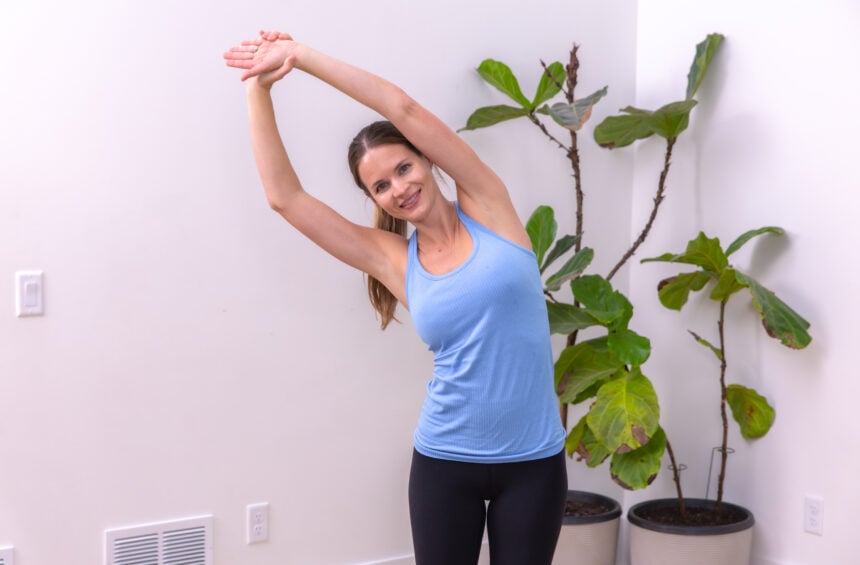
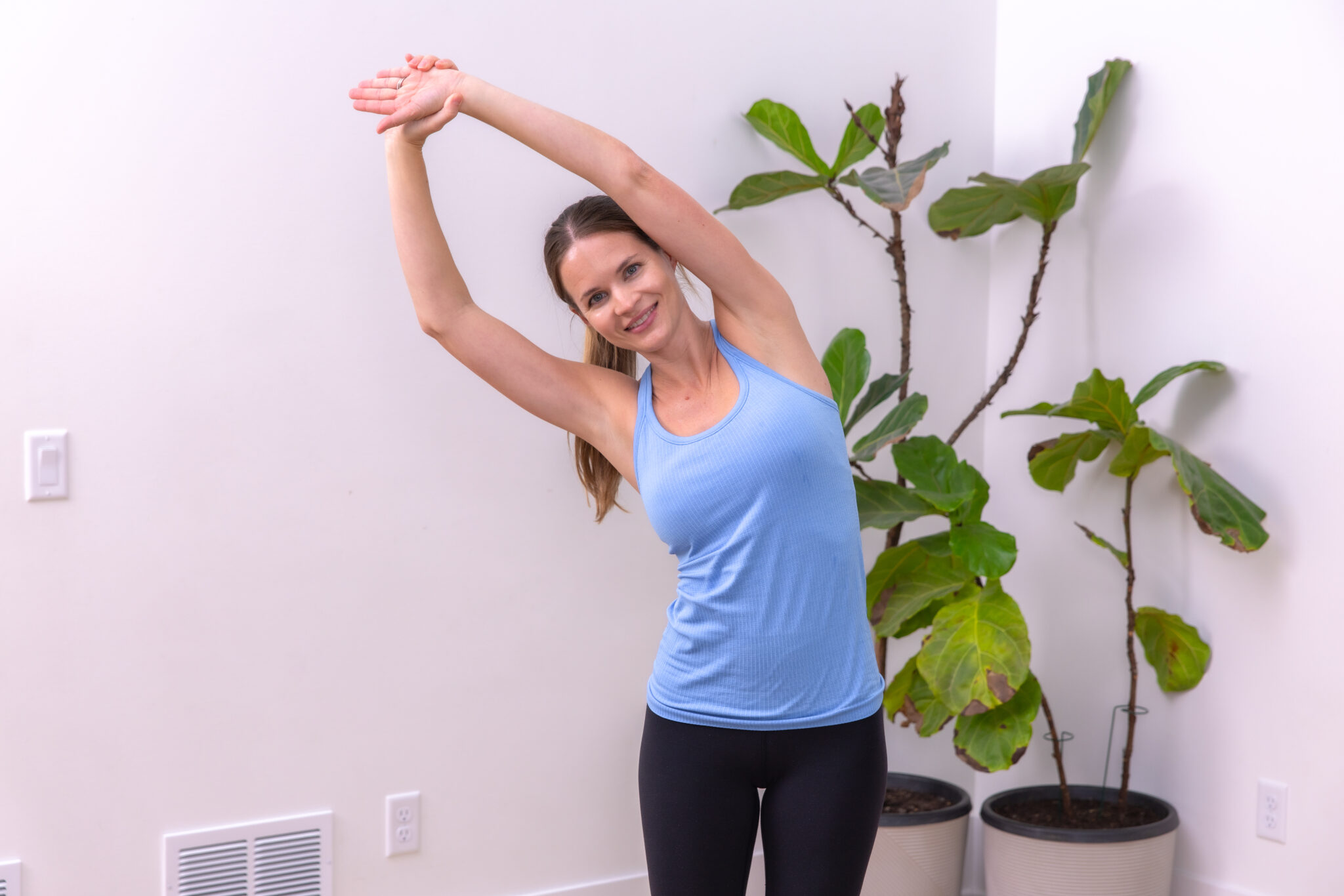
- Side Bend
- Side Bend with Arm Circles
- Rag Doll
- Cat-Cow
- Child’s Pose
- Knees to Chest
- Hamstring Stretch
- Supine Spinal Twist
- Lying Trunk Rotation
- Seated Side Stretch
- Seated Breaths
Each exercise is designed to be low-impact and easy to follow. They allow for gentle, fluid movements that promote lymphatic drainage without strain. Adjustments can be made based on personal comfort levels to avoid overexertion.
Step-by-Step Guide to Each Exercise
1. Diaphragmatic Breathing
- Stand in a comfortable position. Gently press your hands into your belly.
- Inhale deeply through your nose, feeling your belly rise as you fill it with air, but allow for resistance with your hands.
- Exhale slowly through your mouth, allowing your belly to fall.
- Repeat 4-5 times, focusing on slow, controlled breathing to relax your body and stimulate the lymphatic system.
2. Side Bend
- Stand tall with your feet hip-width apart and arms at your sides.
- Clasp your hands overhead, reaching towards the ceiling.
- Exhale as you gently bend to the left, feeling the stretch along your right side.
- Hold for a few breaths, then return to the starting position.
- Repeat on the other side, alternating for 45 seconds.
3. Side Bend with Arm Circles

- Begin standing with your feet hip-width apart and arms overhead.
- Clasp your hands overhead, reaching towards the ceiling.
- Inhale as you rotate your arms until you return to the starting position
- Switch to bending to the right and repeat.
- Continue alternating for 45 seconds.
4. Rag Doll

- Stand with your feet hip-width apart, knees slightly bent.
- Hold your elbows with your opposite hand.
- Exhale and hinge at the hips, bending forward and letting your arms hang toward the ground.
- Relax your head and neck, feeling a gentle stretch in your back and hamstrings.
- Open your arms from the side and stretch your arms overhead as you return to the starting position.
- Hold for 45 seconds, breathing deeply, and then rest.
5. Cat-Cow

- Start on your hands and knees in a tabletop position, shoulders over wrists and hips over knees.
- Inhale as you arch your back, dropping your belly and lifting your head and tailbone (Cow Pose).
- Exhale as you round your spine, tucking your chin and drawing your belly button toward your spine (Cat Pose).
- Continue alternating between these two positions for 1 minute before taking a short rest.
6. Child’s Pose
- Begin in a kneeling position with your big toes touching and knees apart.
- Sit back on your heels and extend your arms forward on the ground.
- Lower your forehead to the mat, relaxing your entire body.
- Breathe deeply, holding the pose for 1 minute, focusing on releasing tension.
Note: To intensify the stretch, you can walk your hands from side to side.
7. Knees to Chest
- Lie on your back with both knees bent and feet flat on the floor.
- Engage your core and lift your knees towards your chest, wrapping your arms around them.
- Gently pull your knees closer, feeling a stretch in your lower back.
- Hold for 30 seconds, breathing deeply, then rest.
Note: For additional lymph flow benefit, make circles with your knees and ankles.
8. Hamstring Stretch

- Lie on your back with your knees bent and feet flat on the floor, hip-width apart.
- Straighten one leg toward the ceiling, keeping it extended.
- Use your hands to gently pull the raised leg closer to your body, feeling the stretch in your hamstring.
- Hold for 30 seconds, then switch legs.
9. Supine Spinal Twist

- Lie flat on your back with your arms extended to the sides, forming a “T” shape.
- Bend one knee and bring it across your body toward the floor on the opposite side.
- Place your opposite hand on your knee for support, gently guiding the stretch.
- Keep the other leg extended straight on the mat, with your toes pointing upward.
- Inhale and lengthen your spine. On the exhale, deepen the twist, allowing your gaze to turn in the opposite direction.
- Hold the stretch for 30 seconds, feeling the twist in your spine and stretching through your lower back and hip.
- Slowly return to the center, and repeat on the other side.
10. Lying Trunk Rotation

- Lie on your back with your knees bent and feet flat on the floor.
- Place your hands behind your head, elbows wide, to support your neck.
- Inhale as you prepare, keeping your spine neutral and your feet grounded.
- Exhale as you gently drop both knees to one side, allowing your lower back and hips to rotate while keeping your shoulders flat.
- Hold the stretch for 30 seconds, feeling the twist in your spine and stretch in your hips.
- Inhale to return to the center, and exhale as you repeat on the opposite side.
11. Seated Side Stretch
- Sit comfortably with your legs crossed in front of you.
- Inhale and raise your right arm overhead.
- Exhale and lean to the left, feeling a stretch along your right side.
- Hold for 30 seconds, then switch sides.
12. Diaphragmatic Breathing
- Gently press your hands into your belly.
- Inhale deeply through your nose, feeling your belly rise as you fill it with air, but allow for resistance with your hands.
- Exhale slowly through your mouth, allowing your belly to fall.
- Repeat 4-5 times, focusing on slow, controlled breathing to relax your body and stimulate the lymphatic system.
Tips for Consistency
To maximize the benefits of your lymphatic flow exercises, set reminders and find ways to incorporate them into your daily routines, such as during work breaks or while watching TV. Consistency is key!
Here are some practical tips:
- Schedule Dedicated Time: Allocate specific times for your morning or evening lymphatic flow exercise routine, or set reminders on your phone or calendar.
- Combine with Other Activities: Incorporate lymphatic exercises into your yoga or stretching sessions. Or, if you are someone who enjoys strength training, try using a few of these exercises as your warm-up or cool-down.
- Utilize Short Breaks: Take short breaks during your day to squeeze in two to three lymphatic exercises, especially if you have a sedentary job. Even a few minutes can make a difference.
Join the 3-Week Lymphatic Health Challenge.
Looking for more? Try my 3-Week Lymphatic Drainage and Exercise Plan. This downloadable guide includes daily lymphatic drainage and lymphatic health routines. It’s a great way to find consistency and build a routine that you can stick with.
Final Thoughts: Lymphatic Flow Exercises
Exercise doesn’t need to be intense to be effective for lymphatic health and drainage. Just 10-15 minutes each day of movement can improve circulation, reduce swelling, and support your immune system.
It’s important to remember that consistency is crucial to benefit your lymphatic system. For more valuable tips and resources on maintaining optimal lymphatic health, subscribe to our newsletter and join our YouTube community for more tips, techniques, and resources.
Frequently Asked Questions About Lymphatic Flow Exercises
How do you improve lymphatic flow?
Regular physical activity, hydration, and targeted exercises like lymphatic flow routines can improve lymphatic circulation.
You can also try lymphatic drainage massage, which is a gentle technique for manual lymphatic drainage that stimulates the flow of lymph fluid throughout the body.
What stimulates lymphatic flow?
Gentle movements, deep breathing, manual lymphatic drainage, and specific exercises designed to engage the lymphatic system stimulate lymphatic flow.
I also recommend gentle rebounder exercises to help keep your lymph fluid circulating throughout your body.
How do I know if my lymphatic system is clogged?
Symptoms such as swelling, fatigue, frequent infections, and a feeling of heaviness in the limbs may indicate lymphatic congestion.
What is the best position to sleep to reduce leg swelling?
Sleeping flat so your legs are equal to your heart is ideal. Try to avoid sleeping sitting up, where your legs are below your heart. This can cause an increase in leg swelling. Elevating your legs during the day can promote and encourage lymphatic drainage. A wedge pillow may be beneficial for elevating your legs.
How often should these exercises be done?
Exercise should be done three to five times a week for overall health. Your lymphatic system benefits from all movement and exercise, which can be done a few times a week or daily.