

If you notice in the evening that your shoes feel tighter than they did in the morning, your ankles look puffy, and your legs feel heavy, know that while this kind of swelling is common, it doesn’t have to be your new normal.
As a Doctor of Physical Therapy and a certified lymphedema therapist (CLT-LANA), I work with people every week who are managing swelling in their legs and feet. Swelling is common, and there are accessible, practical things you can do to help manage it.
In this post, I share the four main approaches I use with my patients: compression, exercises, lymphatic drainage, and elevation. I’ll also cover when the swelling in your legs and feet is something you should discuss with your doctor.
Why Do Legs and Feet Swell More in the Afternoon?
Gravity makes it difficult for fluid to travel from your lower body back to your heart when you’re standing or sitting all day. Because your legs and feet are the furthest points from your heart, fluid naturally pulls downward and can pool in your lower limbs.
Research confirms what I see frequently in my practice: swelling complaints peak in the late afternoon and evening rather than the morning. You can read more in this PubMed study on the seasonality of ankle swelling.
Some common reasons for swelling in your legs and feet:
- Standing or sitting for long periods without moving
- Venous insufficiency (when the veins in the legs struggle to return blood to the heart)
- Lymphedema (when the lymphatic system has been damaged or disrupted)
- Post-surgical swelling
- Medications, including some blood pressure drugs and hormonal therapies
- Pregnancy
- Heart, kidney, or liver conditions
For some people, swelling is mild and occasional. For others, it’s a daily reality tied to a chronic condition like lymphedema or venous insufficiency.
The management protocols in this post can help with both. The approach may look a little different depending on what’s causing your swelling.
Compression Stockings for Swollen Legs and Feet: What You Need to Know
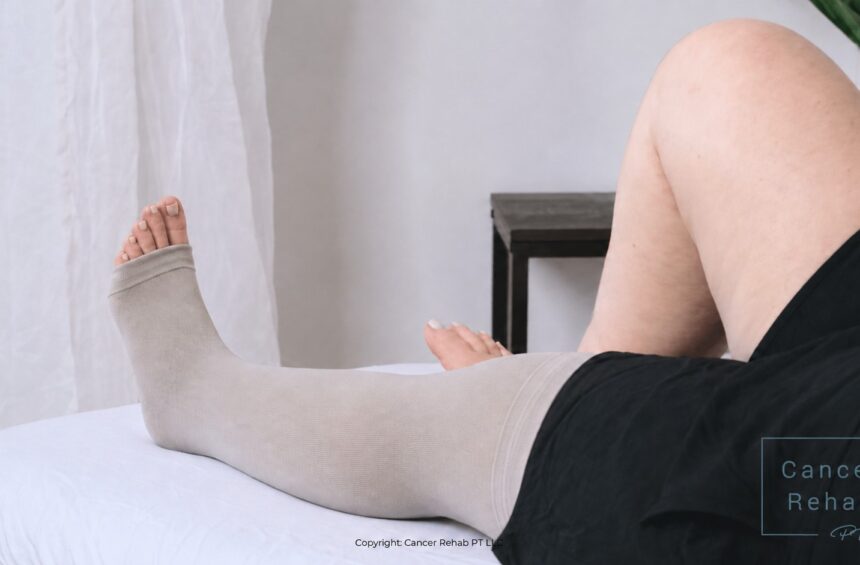
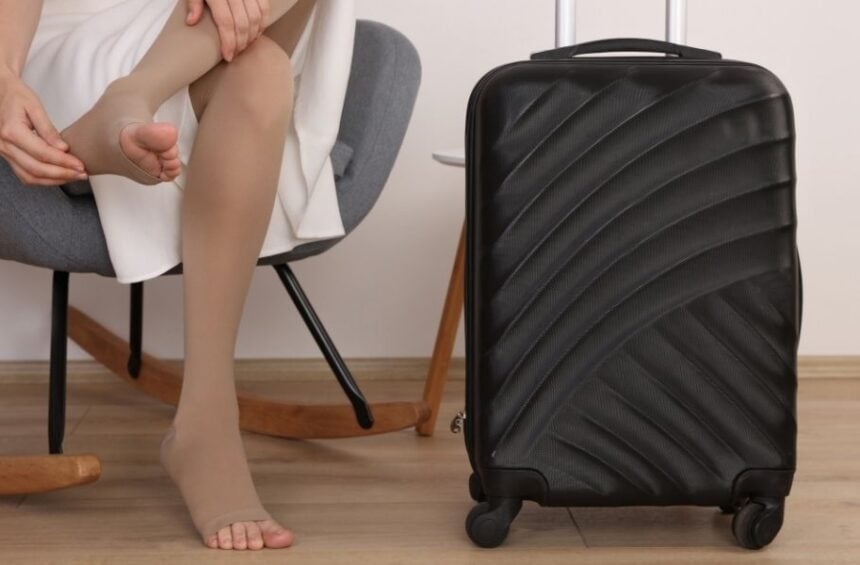
Compression is usually the first thing I reach for with patients who have consistent swelling. A compression stocking supports the veins and lymphatics, helping fluid move up and out of the lower leg instead of pooling there.
Most drugstore stockings are 10 to 15 mmHg. That’s a light compression that works for mild, occasional swelling. If your swelling shows up most days, you’re likely going to want 20 to 30 mmHg. That’s a medical-grade level. The tag on the stocking will tell you what compression level it is.
Circular-Knit vs. Flat-Knit Compression Stockings
There are two main types of compression stockings, and the difference matters more than most people realize.
Circular-knit stockings are the standard option. They’re thin, stretchy, and have no seams. They work well for mild-to-moderate swelling and are easier to find over the counter. Most people start here.

Flat-knit stockings are thicker and sturdier. They’re usually custom-fitted. They’re typically prescribed when someone has true lymphedema, more severe swelling, or when circular-knit stockings are cutting in at the top and creating a tourniquet effect. That can actually make swelling worse. If your stockings feel like they’re digging in, that’s worth noting.
A velcro wrap is another option worth knowing about.


A velcro wrap goes from the ankle to the knee and is much easier to get on and off than a traditional stocking. You can adjust the compression level, which is helpful when swelling changes throughout the day. Some velcro wraps can also be worn at night if nighttime compression is needed.
What to do When Compression Stockings Don’t Work
Two things usually explain why someone isn’t getting results from compression stockings.
First, they may be in the wrong kind. If your swelling is significant and you’ve been trying a basic circular-knit stocking from the drugstore, it may simply not be strong enough.
Second, compression stockings are designed to maintain a reduced swelling level. They’re not designed to reduce a large amount of swelling on their own.
If someone has a lot of swelling, they typically need to go through Complete Decongestive Therapy (CDT) first to bring the volume down. Then they can transition to stockings to maintain the result.
CDT is an intensive treatment program for lymphedema and significant swelling. It involves manual lymphatic drainage, short-stretch compression bandaging, exercise, and skin care. It’s done with a certified lymphedema therapist. The National Lymphedema Network maintains a directory if you need help finding one in your area.
If your swelling isn’t responding to compression, looping in a CLT is a good next step.


Exercises to Reduce Swelling in Legs and Feet
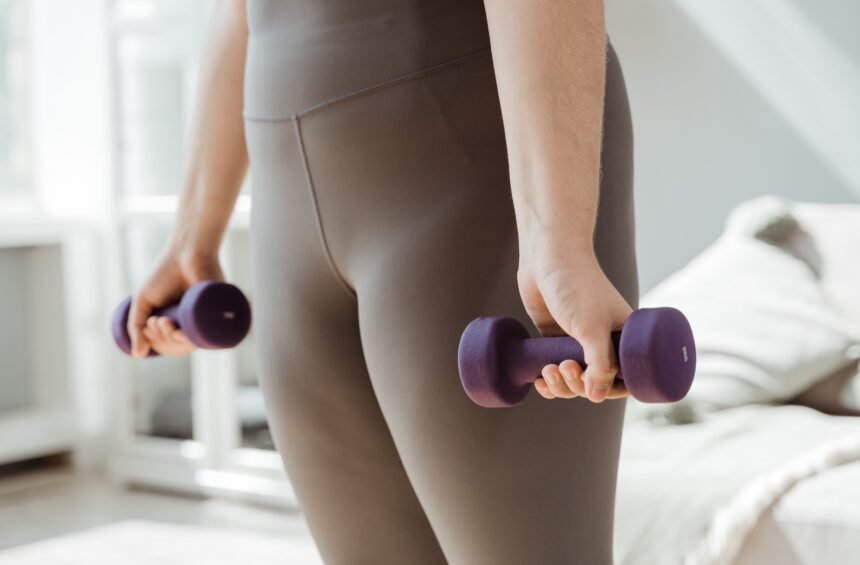
Your muscles act as a pump for your circulatory and lymphatic systems. Every time you contract a muscle, you’re helping push fluid up and out of the lower leg. This is why movement can greatly help reduce swelling.
If you’ve been sitting for a long time, even pumping your ankles can help. Getting up and moving around every 30 to 60 minutes during the day is one of the most underrated tools for managing swelling.
Here are the exercises I recommend most often for swelling in the legs and feet. Most can be done sitting or lying down, which makes them accessible even for people with limited mobility.
1. Ankle Pumps

How to do it:
- Sit or lie down with your legs extended or slightly elevated.
- Point your toes toward your nose (flex), then push them away from you (point).
- Repeat 20 to 30 times, several times a day.
Why it works: Ankle pumps activate the calf muscles. The calf is one of the primary pumps for venous return and lymphatic flow in the lower leg. Even a few sets throughout the day can help prevent fluid from pooling.
2. Ankle Circles

How to do it:
- Sit or lie down with your legs extended.
- Slowly rotate one foot in a circle, 10 times clockwise, then 10 times counterclockwise.
- Switch feet and repeat.
Why it works: Circles move the ankle through a full range of motion, working the calf and foot muscles from multiple angles. This gives the lymphatic and venous systems a more complete pump than pumps alone.
3. Seated Calf Raises

How to do it:
- Sit in a chair with your feet flat on the floor.
- Lift your heels off the floor, coming up onto your toes.
- Lower slowly back down.
- Repeat 10 to 15 times, a few times a day.
Why it works: The calf is sometimes called the second heart because of how powerfully it drives fluid back toward the body’s core. Seated calf raises are particularly useful for people who can’t do standing exercises.
4. Knee Marches

How to do it:
- Sit in a chair with your feet flat on the floor.
- Lift one knee up toward your chest, then lower it.
- Alternate legs in a slow marching motion.
- Continue for 30 to 60 seconds, 2 to 3 times a day.
Why it works: Marches activate the larger muscles of the thigh and hip. This creates a stronger pump effect through the whole leg. They also work the lymphatic vessels in the thigh, helping move fluid toward the lymph nodes in the groin.
5. Leg Raises

How to do it:
- Lie on your back with one leg bent and one leg straight.
- Slowly lift the straight leg to the height of the bent knee.
- Hold for 5 seconds, then lower slowly.
- Repeat 10 to 15 times, then switch legs.
Why it works: Leg raises engage the thigh muscles and use gravity to encourage fluid to drain out of the lower leg. The combination of muscle activation and a slightly elevated position makes this one of the most effective exercises for leg swelling.
For a more complete exercise routine for leg lymphedema or swelling, see this post on lymphedema leg exercises.
Lymphatic Drainage Massage for Swollen Legs and Feet
Lymphatic drainage massage is a gentle technique that guides lymphatic fluid through the lymphatic vessels and out of congested areas. It uses very light pressure and follows the direction of lymph flow toward the lymph nodes.
For swelling in the legs and feet, the technique works upward from the foot toward the knee, and from the knee toward the groin. Evening is often a good time to do this because that’s when swelling tends to be at its highest. Lying down and elevating your legs before starting helps gravity do some of the work.
I’ve put together a detailed guide on how to do a lymphatic drainage massage for legs at home. That’s a good place to start if you’re new to the technique.
There’s also a full-body morning lymphatic drainage routine if you want something to do at the start of your day.
Lymphatic drainage is safe for most people when done correctly. If you have an active infection, a blood clot, or a recent surgery, check with your medical provider before starting.
Does Elevating Your Legs Help Reduce Swelling?
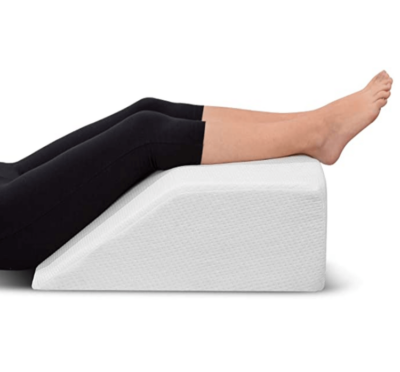
Yes. Elevation is one of the simplest, most practical tools for managing swelling in the legs and feet. Positioning your legs above the level of your heart lets gravity help drain fluid out of the lower limbs and back toward the core.
Even 15 to 20 minutes of elevation in the evening can make a noticeable difference, especially if you’ve been on your feet all day. Combine it with ankle pumps or circles while you’re elevated, and you’ll get the benefits of both movement and gravity at the same time.
A leg bolster, or a few firm pillows under your calves, works well. Your legs need to be actually above heart level. Resting on a low ottoman does not have the same effect.
When Should You See a Doctor About Swollen Legs and Feet?
Most swelling in the legs and feet is benign. Mild, bilateral swelling (both legs) that’s better in the morning after a night of rest is rarely a sign of something serious. Some swelling does warrant prompt medical attention.
Contact your doctor or get care right away if you notice:
- Sudden or severe swelling in one leg, especially if it’s red, warm, or painful. These can be signs of a blood clot or DVT.
- Swelling that comes with shortness of breath, chest pain, or unexplained weight gain. This may point to heart or kidney involvement.
- Skin that looks shiny or tight. If you press on the swollen area and the indent doesn’t recover quickly, that’s pitting edema and worth a doctor’s evaluation.
- Fever along with swelling. This can signal an infection.
- Swelling that has been present for weeks without improving, especially in only one leg.
If your swelling keeps returning and doesn’t respond to compression, exercise, and elevation, that’s also worth bringing to your doctor. It may point to a chronic condition like lymphedema or venous insufficiency that needs a more targeted treatment plan.
According to the Cleveland Clinic, early identification and treatment of lymphedema lead to significantly better long-term outcomes.
Frequently Asked Questions
What is the fastest way to reduce swelling in legs and feet?
The fastest short-term relief usually comes from combining elevation with movement.
Lie down and prop your legs above your heart, then do ankle pumps and circles for a few minutes. If you wear compression stockings, putting them on first thing in the morning is one of the most practical ways to prevent swelling from building up during the day.
Can exercises make swollen legs and feet worse?
In most cases, no.
Gentle movement improves circulation and helps the lymphatic system move fluid out of the lower leg. High-impact or very intense exercise can temporarily increase swelling in people with lymphedema.
If you have been diagnosed with lymphedema, wearing your compression garment during exercise is important. Start slowly, pay attention to how your legs respond, and check with your CLT if you’re unsure what’s appropriate for your situation.
How often should I do exercises for swollen feet and ankles?
Getting up and moving for a few minutes every 30 to 60 minutes throughout the day works better than one longer session.
For exercises like ankle pumps and calf raises, several short sets spread throughout the day tend to produce better results than doing all your repetitions at once. Consistency over time can help reduce swelling more than one long session.
Does drinking water help reduce swelling in the legs?
Staying well-hydrated supports kidney function and overall fluid balance. Dehydration can cause the body to retain more fluid as a protective response, which may worsen swelling.
If your swelling is related to a heart or kidney condition, your medical team may have specific guidance on fluid intake. Follow their lead.
What causes swelling in one leg but not the other?
Swelling in only one leg is worth paying attention to.
It can be a sign of a blood clot (DVT), which needs immediate medical attention. It can also indicate lymphedema, particularly if you’ve had surgery, radiation, or lymph node removal on that side of the body.
If you’re seeing swelling consistently in just one leg, this post on one-sided leg swelling covers causes and treatment options.
Managing Swelling in Legs and Feet
Consistent swelling in the legs and feet is one of the most common complaints I hear in my practice. These are the tools I recommend to my patients that can help reduce swelling and improve quality of life: compression worn consistently, movement built into your day, lymphatic drainage done regularly, and elevation used when you can.
None of these produce overnight results. Swelling managed consistently over weeks responds better than any single session because that’s how both the venous and lymphatic systems work.
If your swelling is related to a chronic condition like lymphedema, working with a CLT can help you build a routine that addresses your specific situation. My Lower Body Lymphedema Rehab program walks through the same approaches I use with patients in a structured format you can follow at home.