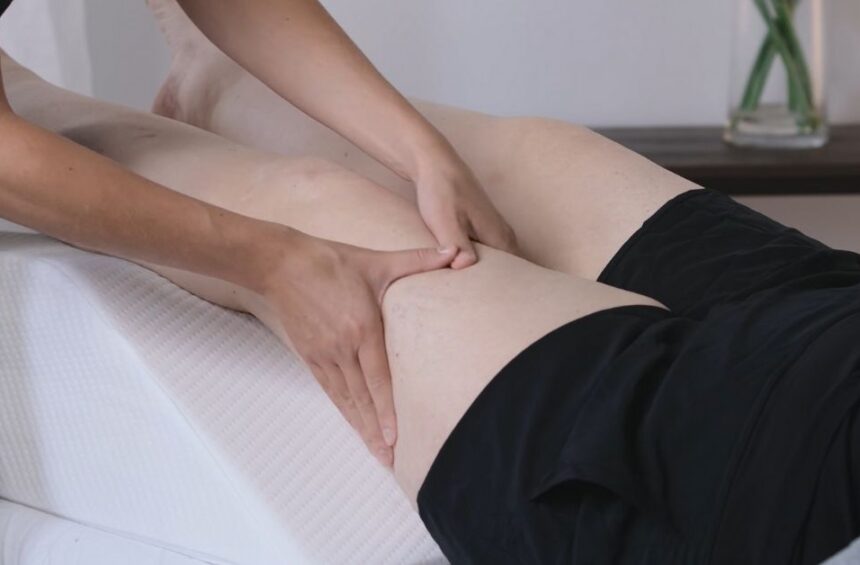
If you’re dealing with swollen ankles, puffy legs, or a chronic condition like lymphedema, you’ve probably heard that movement can help you reduce swelling. It’s true! The best exercise for lymphatic drainage is simply getting your body moving regularly.
That said, while most forms of physical activity help, there are specific types that I consistently recommend to my patients as a lymphedema physical therapist (CLT-LANA) because they’re very effective at moving lymphatic fluid through your body.
Here’s what they are and what you need to know about them.
Benefits of Exercise for Your Lymphatic System
Your lymphatic system doesn’t have a pump like your heart. It relies on muscle contractions and movement to push lymph fluid through your lymph nodes and vessels.
When you exercise, your muscles help your lymphatic vessels move fluid along instead of letting it sit in one place.
As a result, physical activity and exercise can help you keep chronic swelling under control and prevent it from worsening. This is especially important if you’re at high risk of developing lymphedema, a chronic condition where lymph fluid builds up in your body and causes swelling.
In fact, according to BreastCancer.Org, “Gentle stretches and exercises can help either reduce the risk of lymphedema or improve symptoms of early lymphedema stages.”
As a certified lymphedema therapist (CLT-LANA), physical activity is one of the first things I recommend to my patients.
It’s also a core component of Complete Decongestive Therapy (CDT), the gold standard treatment for lymphedema that combines compression, manual drainage, exercise, and skin care.
Learn more about lymphedema self-care.
What Exercise Is Best for Lymphatic Drainage?
There isn’t one single best exercise for lymphatic drainage, but here is what I recommend most often to people living with chronic swelling or lymphedema, or anyone who wants to support their lymphatic system:
1. Walking
Walking is one of the simplest and most effective exercises for lymphatic drainage. When you walk, the rhythmic contraction of your leg muscles pushes lymph flow upward through your vessels.
Your calf muscles work like a pump with each step, which is why walking is so beneficial for leg swelling.
I tell my patients to start with whatever distance feels comfortable, even if it’s just 10 minutes of walking around their neighborhood. You don’t need to walk fast or far to see benefits, and consistency is more important than intensity or speed. Just a short walk every morning can be very beneficial.
2. Rebounding
Rebounding means bouncing gently on a mini trampoline. The up-and-down movement creates changes in gravity that help move lymph fluid through your body.
Each bounce contracts and releases your muscles, which pumps lymph fluid along.
Some people with balance concerns prefer to hold onto a stability bar attached to the rebounder. You can start with just a few minutes of bouncing and gradually increase as you get more comfortable.
If you don’t have one yet, here are my favorite rebounders that are easy to use at home:


3. Vibration Plates
Vibration plates are a newer form of exercise that I find to be very helpful for lymphatic drainage and managing lymphedema. These devices create rapid muscle contractions without you having to move much.
You stand on the plate while it vibrates, causing your muscles to contract and relax dozens of times per second.
These muscle contractions stimulate lymphatic flow. You can stand on the plate with your feet flat or do a simple workout for lymph drainage. For example, try these vibration plate exercises for beginners.
If you’re looking for a good vibration plate, here are my favorite brands that I’ve personally tested:


I also have a helpful digital guide with vibration plate exercises if you don’t know where to start:

Learn more about vibration plates vs rebounders and which form of exercise is right for you!
4. Deep Breathing Exercises
Your breathing affects your lymphatic flow. When you take deep breaths, your diaphragm moves up and down, creating pressure changes in your upper chest and abdomen that help pull lymph fluid from your limbs toward your heart.
Deep abdominal breathing can help drain lymph from your torso, but it can also work for swelling in your arms or legs.
To practice diaphragmatic breathing, breathe deeply into your belly, letting it expand on the inhale and contract on the exhale. Do this for 5-10 breaths several times throughout the day. This is a great lymphatic drainage exercise because it’s free, you can do it anywhere, and it only takes a few minutes.
5. Yoga
Yoga combines movement, stretching, and deep breathing, all of which support lymphatic drainage. Plus, it’s very easy to practice at home—you just need a yoga mat, and there are thousands of exercise programs that you can find online.
Yoga stretches lengthen your muscles and open up pathways for lymph fluid to flow.
Many yoga poses elevate your arms and legs above your heart, using gravity to help drain fluid from swollen limbs. This is a great option for people who enjoy this form of exercise.

6. Swimming
When you swim, the water pressure against your body acts like compression, gently pushing on your limbs and helping move lymph fluid. At the same time, you’re moving your muscles, which also pumps fluid through your vessels.
Swimming is especially a good option if you have pain or limited mobility because water takes weight off your joints.
You don’t need to swim laps. Simply moving around in the pool or doing water walking can help with lymphatic drainage.
7. Cycling
Cycling creates repetitive muscle contractions in your legs, which pushes lymph fluid upward.
Whether you use a regular bike, a stationary bike, ora recumbent bike, the circular pedaling motion keeps your leg muscles working steadily.
If you have arm lymphedema, cycling still helps because the overall increase in circulation benefits your entire lymphatic system.
8. Tai Chi
Tai Chi combines slow and controlled movements with deep breathing. If you haven’t tried it yet, see if this is something you’d enjoy incorporating in your daily routine.
Because Tai Chi is low-impact and meditative, it’s suitable for people at different fitness levels.
Many of the movements involve weight shifting and balance, which engage muscles throughout your body. I’ve had patients with limited mobility find success with Tai Chi when other exercises felt too strenuous.
9. Water Aerobics
Water aerobics is a great alternative to swimming if you’d rather attend a group class. You still get the water pressure pushing against your skin while you move, which is perfect for lymphatic drainage.
Classes typically include a variety of movements such as arm circles, leg exercises, and jumping jacks, all done in chest-deep or waist-deep water.
It’s also a good social activity, which helps some people stay consistent with exercise.
10. Lymphedema Exercises
As a physical therapist, I created exercise guides that target areas of your body prone to swelling.
These exercises activate the muscle groups in a specific sequence that help drain lymph fluid from your arms, legs, torso, and other parts of your body, naturally.
They’re different from general fitness exercises because they follow the natural flow of your lymphatic system.
Here are a few exercise guides that you may find helpful:


Best Exercise for Lymphatic Drainage Legs
Leg lymphedema is one of the most common forms of chronic swelling I see in my practice.
Any physical activity that gets your leg muscles moving will help, but here are some exercises that target lymph drainage specifically in your legs:
- Ankle pumps
- Heel raises
- Marching in place
- Knee lifts
- Leg slides
I also created exercise guides for leg swelling and lymphedema that you can print out and easily follow at home or at the gym with minimal equipment:
Best Exercise for Lymphatic Drainage in Neck
Neck lymphedema is less common than swelling in the arms or legs, but it can happen after head and neck cancer treatment or surgery.
Here are a few exercises that can help you drain lymph fluid from your neck:
- Gentle neck rotations
- Chin tucks
- Shoulder rolls
- Neck stretches
- Head tilts
I also have a helpful guide with all the exercises for neck lymphedema and swelling:
Best Exercise Equipment for Lymphatic Drainage
Most lymphatic drainage exercises don’t require any equipment, and you can do them with just your body.
However, I do recommend vibration plates and rebounders if you want to invest in equipment that’ll support your circulatory system and lymphatic flow.
If you work out at home and want to add variety to your routine, these items can be helpful:
- Resistance bands
- Yoga mat
- Exercise balls
- Foam roller
- Light weights
You can start with what you have and add equipment gradually based on what exercises you enjoy most.
Here is my recommended equipment for lymphatic drainage:


FAQs
Is walking good for lymphatic drainage?
Yes, walking is one of the best exercises for lymphatic drainage. It contracts your calf muscles, which helps pump lymph fluid up from your legs. Walking also increases good circulation in your body and engages many muscles. Even 10-15 minutes of walking at a comfortable pace helps your lymph vessels move fluid, so getting a good workout in can look as simple as going on a nice morning stroll.
How long to jump for lymphatic drainage?
If you’re using a rebounder or doing jumping exercises, you can start with just 5 or 10 minutes. The up-and-down movement stimulates lymph flow quickly, so you don’t need to jump for hours to see the benefits. In my practice, some people do better with a few short sessions throughout the day instead of one longer session. The most important thing is to stay consistent, so find a rhythm that works for you.
What exercises help lymphatic drainage?
The best exercise for lymphatic drainage is whatever you’ll do consistently. Walking, swimming, cycling, yoga, rebounding, and vibration plates all help move lymph fluid through your body. Some exercises, like vibration plates, can be particularly beneficial for your lymphatic system because they create rapid muscle contractions without much effort. But what matters most is finding something you enjoy enough to do regularly.
More Support for Your Lymphatic Health
As a lymphedema physical therapist and lymphatic specialist, I want to make education and exercises for the lymphatic system more accessible to everyone. Many people live with chronic swelling and don’t have access to resources that help, especially when it comes to lymphedema.
I created resources full of exercises for lymphatic drainage:
- Breast Cancer Rehab: For lymphedema related to breast cancer treatment affecting the arm, chest, or neck
- Lower Body Lymphedema Rehab: For lymphedema in the lower body and legs
- Digital Guides: Targeted exercise guides for lymphedema in different parts of your body
Chronic swelling and lymphedema are something that you can manage with regular exercise and other physical therapy practices you can do at home.