

Flying with lymphedema often makes people anxious. As a certified lymphedema therapist (CLT-LANA), I regularly see patients putting off visiting family or canceling vacations because they’re scared a flight will cause a flare and set back the management work they’ve put in.
It’s true that flying, especially for a long time, can be hard on your lymphatic system. You have to sit still and move less than you normally do, which can slow your circulation down.
However, with a simple plan, most people with lymphedema can travel comfortably and enjoy the trip. Here’s everything you need to know about managing lymphedema symptoms while on a plane.
Is It Okay to Fly If You Have Lymphedema?
For most people, yes.
Cabin pressure doesn’t cause lymphedema, and catching a flight won’t undo your progress. There are many myths surrounding flying with lymphedema, but in a study of more than 600 patients treated for breast cancer, researchers found no link between arm swelling and the number of flights taken or how long those flights lasted.
A 2024 expert panel that reviewed the current evidence reached a similar conclusion, finding that air travel is not a significant risk factor for developing lymphedema.
For most lymphedema patients, flying is safe. If you’re at higher risk (for example, you’ve had many lymph nodes removed along with radiation), look at your situation with your CLT to assess risk factors and come up with a plan.
Learn more about doctors that treat lymphedema.
Flying with Lymphedema: 8 Tips from a CLT-LANA to Minimize Swelling
1. Wear a compression garment
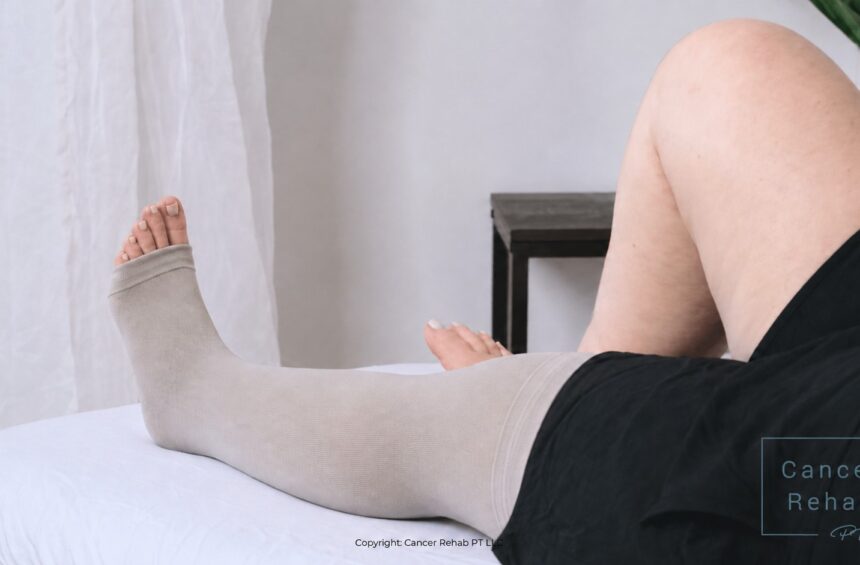
Compression is the most important part of flying well with lymphedema. A garment applies steady external pressure to your limb, and that pressure supports the tissue and helps your muscles push fluid.
Your goal is steady support that keeps your limb well-contained from the beginning of your journey to your destination. You have a few options:
- Your regular daytime garment works well, ideally the strongest level you tolerate and a flat knit that’s still fairly new, so it hasn’t lost its compression
- Bandaging gives you more containment on long flights, when you’re seated for many hours at a time
- A thin, low-profile night garment is easy to wear, and you can bandage a couple of roller bandages over it instead of packing foams and padding
There’s no one right answer, and your CLT can help you figure out what would work best for your situation. Here are a few of my favorite options:


2. Put your garment on before you fly
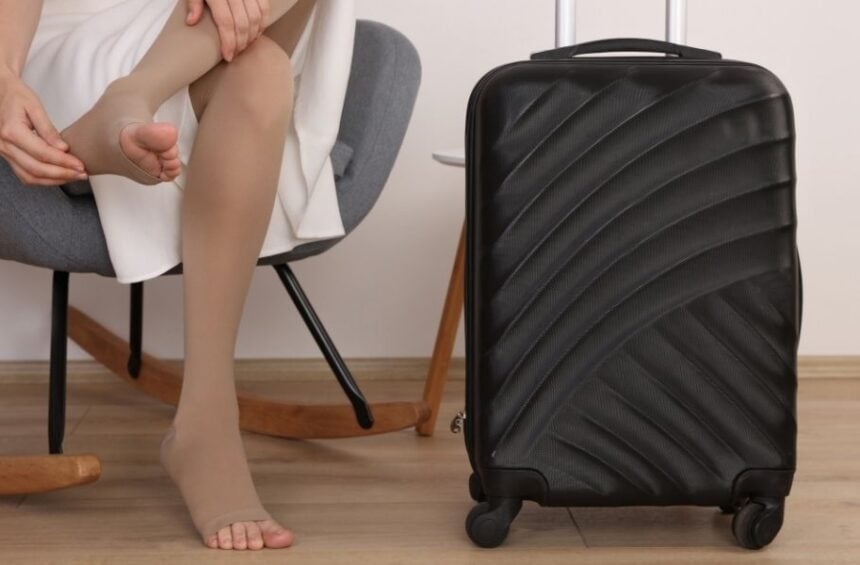
Compression works best as prevention, so put your garment on before fluid has a chance to pool. Ideally, this means getting your garment on before you leave for the airport.
Then, keep it on through the whole flight and for a while (a couple of hours or so) after you land.
3. Try to get simple movement in
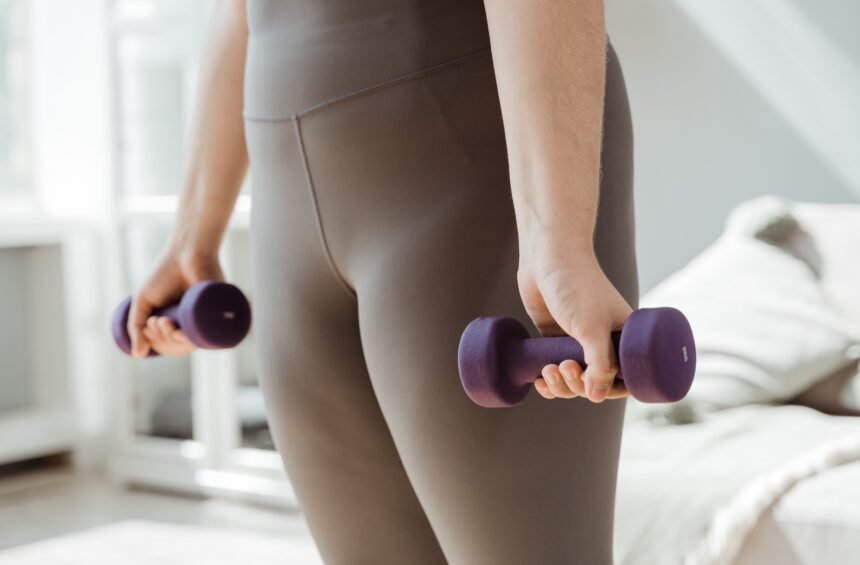
Your muscles work as a pump to move your lymphatic fluid, and sitting still switches that pump off. A bit of movement every 30 to 45 minutes helps prevent fluid accumulation.
You won’t be able to get a full workout done on a plane, but here are a few easy options for your legs:
- Do 20 or more ankle pumps.
- Add a set of heel raises.
- March in place while seated.
- Straighten and bend your knees.
- Walk the aisle when the seatbelt sign is off.
Set a reminder on your phone if you tend to lose track of time on a flight.
4. Add belly breathing
Deep breathing from your belly acts as a central pump for your lymphatic system, and it helps with swelling everywhere in your body, whether it’s in legs, arms, neck, or genitals.
It’s easy to do in your seat. Breathe in slowly through your nose so your belly expands, then let the breath out slowly. A few rounds every so often is plenty.
5. Stay hydrated
A lot of people cut back on water on purpose when they travel, since it’s inconvenient. That’s understandable, but dehydration makes your lymphatic system less efficient and can cause swelling.
As you’re preparing for your flight, drink plenty the day before, the day of, and the day after your flight. You don’t need to force down a lot at once, just sip steadily across those days.
6. Elevate when you can
Elevation helps drain fluid from your legs, but a standard airplane seat keeps them down more than usual, so there’s not much you can do mid-flight. Instead, fit elevation in around the flight.
Look for good times to elevate while you wait at the gate, during layovers, and as soon as you arrive. Even a few minutes with your legs up are helpful, and they’ll add up over a long travel day.
7. Pack a backup
Your daytime garment is great for maintenance, but it may not be able to bring swelling down once it’s up. For that, you want a reduction tool with you.
Pack a couple of roller bandages or a low-profile night garment you can use to bring swelling back down, especially for long flights or humid destinations that can make chronic lymphedema worse.
If you use a compression pump, consider bringing it. Many lymphedema pumps count as medical devices, so they don’t count toward your bag limit. You can also use a doctor’s note for carrying compression garments and medical devices through security.
8. Take care of your skin and make an infection plan
A skin infection like cellulitis is one of the few things that can set your management back. Your skin keeps infection out, but cabin air is dry and can leave it cracked and vulnerable, so a travel day calls for some extra care.
Here’s what to do to keep your skin intact:
- Moisturize before and during the trip to counter the dry cabin air
- Wear sunscreen so a sunburn doesn’t damage the skin on your at-risk limb
- Choose loose, non-restrictive clothing so nothing rubs or irritates the skin
After you land, keep an eye on your limb for redness, warmth, or any change that could signal an infection starting, and act early if you spot one.
If you’ve ever had an infection in that limb, talk with your doctor before you travel, especially if you’re going abroad, and learn what your healthcare options are where you’re headed. That way you know where you’d go and what you’d do just in case. Some doctors prescribe antibiotics to bring along, but that’s a decision between you and your doctor.
Flying with Lymphedema in Arm
Arm lymphedema usually develops after breast cancer treatment. The tips above all apply, but a few things are specific to the arm:
- Always pair a sleeve with a hand piece, either a glove or a gauntlet, since a sleeve that ends at the wrist can push fluid down into your hand
- Every 30 to 45 minutes, open and close your hand, roll your wrists and shoulders, and reach up with a few gentle squeezes
- Ask for help with the overhead bin, and keep heavy bags off your affected arm
If you already have arm lymphedema, wear your well-fitted daytime garment on travel days. A question I often get is whether you can go through TSA with your compression on, and the answer is yes.
Flying with Lymphedema in Legs
With leg lymphedema, here are a few things to focus on while flying:
- Choose compression you’ll keep on for the entire flight, whether that’s your daytime garment, bandaging, or a night garment you can bandage over
- Keep your muscles active with ankle pumps, heel raises, seated marching, and short aisle walks
- Elevate your legs at the gate, during layovers, and once you arrive
- If you use a compression pump, consider bringing it
Sitting for hours is hard on the legs, so anything that keeps fluid moving upward is helpful.
Flying with Lymphedema in Head and Neck
Head and neck lymphedema is less common, and you can’t wrap or elevate this area the way you would an arm or a leg. Instead, you should:
- Stay upright instead of reclining, and sleep with your head elevated the night before and the night after
- On an overnight flight, use a pillow that supports the back of your head without pressing into your neck
- Keep your muscles active by swallowing, chewing, talking, and moving your face, plus get your whole body moving every hour or so
- Do a short lymphatic drainage session before boarding, one mid-flight, and one after you land, starting above the collarbone before moving to your neck and face
If you’ve had a neck dissection, follow the lymphatic drainage route your CLT mapped out for you.
FAQs
What happens if you fly with lymphedema?
For most people, not much. You might notice some extra swelling after a long day of travel, which usually goes down once you’re back into your normal routine. The evidence doesn’t show that flying causes lasting swelling or damage for most people. If you’re higher risk, talk with your CLT before you go.
What is the best outfit to wear when flying with lymphedema?
Loose, non-restrictive clothing that feels comfortable over your compression garment. You want fabric that doesn’t dig in anywhere along the affected limb or at your waist, since anything tight can restrict lymph flow. Soft layers also let you adjust as the cabin temperature shifts.
Should I wear a compression sleeve when flying with lymphedema?
If you already have arm lymphedema, yes, wear your well-fitted sleeve on travel days, and pair it with a hand piece. If you’re at risk but don’t have lymphedema, you don’t automatically need a sleeve just to fly. Current evidence doesn’t support buying one for that reason alone, so it’s a personal decision to make.
Looking for More Support with Managing Lymphedema?
As a physical therapist and a certified lymphedema therapist (CLT-LANA), I believe that good lymphedema care shouldn’t depend on living near a clinic that offers it.
I created my program, Lower Body Lymphedema Rehab, to make lymphedema education and management more accessible.
Inside the program, you’ll find:
- Comprehensive, evidence-based lymphedema education
- Manual lymphatic drainage (MLD) techniques
- Compression therapy routines
- Physical therapy exercises for lymphedema
- Skin care recommendations
- Kinesiology tape tips
- And more!
You can also get started with my digital guides, linked below: